
The first Allen & Ginter pack I opened had a baseball player on the front and a subject I didn't recognize on the back. That small surprise is the point of the product: you aren't only opening baseball cards, you're opening a carefully designed collection of familiar names, odd discoveries, miniatures, and possible hits.
Table of Contents
- The Tobacco-Era Roots of the Allen and Ginter Brand
- What's Actually Inside a Modern Hobby Box
- Understanding the Hit Guarantee Beyond the Headline
- Building a Set From Sealed Boxes
- Sealed Box Versus Singles Versus Graded Slabs
- Spotting Authentic Sealed Product
- How the Box Performs in Breaks, Auctions, and Resale
- Smart Ways to Approach Your First Box
The Tobacco-Era Roots of the Allen and Ginter Brand
To understand an Allen & Ginter box, start in Richmond, Virginia, in the late nineteenth century. Allen & Ginter was a tobacco manufacturer that had already produced advertising cards before making a major promotional move in spring 1888, when it began inserting N28 lithographed World Champions cards into Richmond brand cigarette packs. The cards gave customers something to collect after the cigarette was gone, turning an inexpensive consumable into a repeat-purchase experience built around discovery and completion. Sports Collectors Digest's account of the tobacco era places that move within the wider history of promotional card collecting.
That formula mattered because the cards didn't need to feature one narrow subject. They could showcase athletes, performers, champions, curiosities, and other people likely to catch a buyer's eye. The appeal came from the combination of attractive printed artwork, series collecting, advertising, and secondary trading. A customer might want one card, then keep buying to find the next subject or finish a run.
Why the old formula still works
Modern Allen & Ginter products intentionally echo that tobacco-era identity. Compact mini cards, eclectic subjects, ornate presentation, and vintage-inspired design make the brand feel different from a release focused only on rookies and chrome parallels. The visual language suggests a cabinet of curiosities, where a baseball star can sit beside a creator, champion, historical figure, or cultural personality.
That distinction is important for buyers. Allen & Ginter cards are foundational to the broader history of non-sport and sports cards, but the original products weren't modern sealed hobby boxes. The modern box borrows the concept rather than reproducing the original retail format.
The useful question isn't only “Which baseball player can I pull?” It's “What kind of collection does this product invite me to build?”
That answer explains why the brand reaches beyond traditional baseball collectors. Someone may buy a box for the baseball checklist, then become interested in the mini cards, non-sport subjects, framed cards, or the strange but appealing combinations that define the product.
What's Actually Inside a Modern Hobby Box
A buyer should begin with the product configuration printed or advertised for the specific release year. Allen & Ginter products can change, so a box from one year shouldn't be used as a guarantee for another.
For the 2023 Topps Allen & Ginter Baseball hobby release, a standard hobby box contained 24 packs with 8 cards per pack, producing 192 pack cards before any boxloader or special packaging component is counted. A hobby case held 12 boxes, which equals 288 packs and 2,304 pack cards across the case. The 2023 hobby-box listing at Steel City Collectibles provides the release configuration and advertised contents.
Read the box from the outside in
Start with the packs. The fixed pack count tells you how many individual openings you'll get, while the cards-per-pack figure tells you the basic volume of cardboard. Each pack also included a tobacco-era-style mini card, implying approximately 24 mini cards in a box, and product descriptions identified one boxloader or box-topper component per sealed box. Those pieces matter because collectors often treat minis, full-size cards, and boxloaders as separate collecting targets.
The advertised hit content was approximately three major hits per box, drawn from a mixed group that could include autographs, relics, rip cards, original Allen & Ginter buybacks, book cards, cut signatures, and printing plates. “Approximately” and “drawn from” are important words. They describe the product category and expected quantity, not a promise of three autographs or three premium cards.
| Component | Quantity | Notes |
|---|---|---|
| Packs | 24 | Standard hobby-box configuration for the 2023 release |
| Cards per pack | 8 | Produces 192 pack cards |
| Pack cards | 192 | Excludes special box packaging components |
| Mini cards | Approximately 24 | One tobacco-era-style mini per pack |
| Boxloader or box-topper | 1 | Separate component identified in product descriptions |
| Major hits | Approximately 3 | Mixed categories, with exact results varying |
| Hobby boxes per case | 12 | A full case contains 2,304 pack cards |
A case gives a breaker more inventory and a broader distribution of results, but it doesn't make every individual box identical. If you're comparing formats, a practical comparison with other card box types can help you separate pack count, product purpose, and hit expectations before buying.
Understanding the Hit Guarantee Beyond the Headline
A hit guarantee answers a narrow question: how many designated hit cards should the product deliver? It doesn't answer the more important value question: which cards will they be, and what will collectors want to pay for them?
That distinction becomes especially important with the 2025 hobby configuration. The product contains 24 packs of 8 cards, or 192 cards, and guarantees two hits from categories that include autographs, relics, rip cards, book cards, buybacks, or printing plates. The category list is broad, so two hits can represent very different collecting experiences. BaseballCardPedia's 2025 Allen & Ginter overview also notes that an independent estimate places an autograph in roughly two out of every three boxes, while emphasizing that many parallel and insert rates are estimates rather than official disclosures.
Quantity and desirability aren't the same
A relic, an autograph, a rip card, and a printing plate all qualify as meaningful product outcomes, but they don't carry identical demand. A collector chasing a specific player may value a low-demand relic less than a common autograph of a favorite crossover subject. Another buyer may prefer a strange non-sport signature to a conventional baseball memorabilia card.
The two-hit guarantee therefore secures volume, not desirability. It doesn't ensure an autograph, a particular player, a premium patch, or a card that recovers the sealed purchase cost. A rip card adds another decision because opening it changes the original card's format and value. If you sell one, document whether it remains sealed.
| Hit category | What the guarantee tells you | Value question to ask |
|---|---|---|
| Autograph | An autograph may be part of the mixed hit pool | Is the signer relevant to your collection? |
| Relic | Memorabilia can satisfy the hit expectation | Does the subject and material have active demand? |
| Rip card | The card may contain an additional collecting decision | Will you keep it sealed or open it? |
| Book card | A larger-format hit may appear | Does the format suit your display or storage plans? |
| Buyback | An original Allen & Ginter buyback can qualify | Is the historical connection meaningful to you? |
| Printing plate or cut signature | Scarce categories can appear in the pool | Can you verify condition, authenticity, and demand? |
Topps states that the 2024 configuration used 24 packs of 8 cards, with three hits per box and 12 boxes per case, but the exact mix and market value remained variable. The official 2024 Allen & Ginter odds documentOdds.pdf) is a useful reminder to tie every guarantee to its release year.
Building a Set From Sealed Boxes
Set building becomes complicated because “complete” can mean several different things. In the 2025 standard release, the checklist contains 350 cards, made up of 300 main subjects and 50 short prints. A typical pack also includes one mini base card and one full-size insert, so a hobby box supplies 24 mini base cards and 24 inserts even though it contains 192 cards overall. The 2025 hobby-box product information describes that structure.
The first decision is whether you want the main base set, the main set plus short prints, a mini run, a themed insert set, or a broader master set. These are different projects, and opening sealed boxes serves each one differently.
Choose the collecting target first
A collector who wants the 300-card main set has a simpler goal than someone who also wants the 50 short prints. A mini collector is working from a separate stream of cards, while a fan of the non-baseball subjects may ignore most players and focus on creators, champions, political figures, or other cultural names.
| Set tier | Cards needed | Boxes required | Notes |
|---|---|---|---|
| Main base set | 300 | Multiple boxes plus trades or singles | Duplicates make sealed-only completion inefficient |
| Main set with short prints | 350 | More sealed product and targeted singles | Short prints make the final cards harder to locate |
| Mini base target | A separate mini checklist | Depends on the chosen run | Minis should be sorted independently from full-size cards |
| Insert theme | Varies by insert | Depends on the theme | A collector may want one theme rather than every insert |
| Broad master set | Several card families | Often requires targeted buying | Hits, minis, parallels, and box components add complexity |
The practical lesson is simple: a box is a sampling tool, not a complete-set machine. It gives you the enjoyment of discovery and a starting inventory for trades, but it cannot guarantee the subjects you need. Short prints and non-baseball cards can make a collection more interesting while also making the last missing cards harder to source.
Manage duplicates before buying again
Sort full-size base cards, short prints, minis, and inserts into separate piles as soon as you open them. Record the missing cards, then compare the cost and shipping burden of buying those singles with the price of another sealed box.
If your remaining needs are specific, stop treating another box as a shortcut. It may only add more duplicates.
That doesn't make sealed product a poor purchase. It means the purpose changes. A first box can be entertainment and discovery, while later acquisitions should be chosen for completion efficiency.
Sealed Box Versus Singles Versus Graded Slabs
There are three sensible ways to approach Allen & Ginter cards, and each one solves a different problem. Sealed product sells an experience, raw singles provide control, and graded slabs provide a verified presentation with less condition uncertainty.
| Acquisition path | Typical cost | Best for | Key risk |
|---|---|---|---|
| Sealed hobby box | Product-dependent | Opening enjoyment and discovery | Hit quality and resale value vary |
| Raw singles | Card-dependent | Completing a focused checklist | Condition and seller accuracy require inspection |
| Graded slabs | Card-dependent | Display, authentication, and long-term holding | Premium pricing may exceed the raw card's utility |
Buy sealed when the opening matters
A sealed Allen & Ginter box makes sense when you enjoy sorting, surprises, and the possibility of finding an unusual subject or hit. It can also create trade inventory, especially if your collecting interests are broad. The weakness is variance. The box may deliver a satisfying mix, but it won't necessarily deliver the cards you planned to obtain.
Buy singles when the target is narrow
Singles work better when you know the exact player, mini, short print, or non-sport subject you want. You avoid duplicates and don't pay for cards that don't fit your collection. The trade-off is that you must evaluate photographs, condition descriptions, seller history, shipping, and packaging.
Choose slabs for condition-sensitive cards
A graded card can make sense when condition is central to the purchase, when you want a display-ready item, or when authentication reduces uncertainty. A slab isn't automatically a better collecting choice than a raw card. It adds value only when the buyer values the grade, holder, and verification enough to justify the premium.
For a broader explanation of how condition and certification affect purchase decisions, see this guide to graded card prices and valuation. The right path depends on your objective: experience, completion, or presentation.
Spotting Authentic Sealed Product
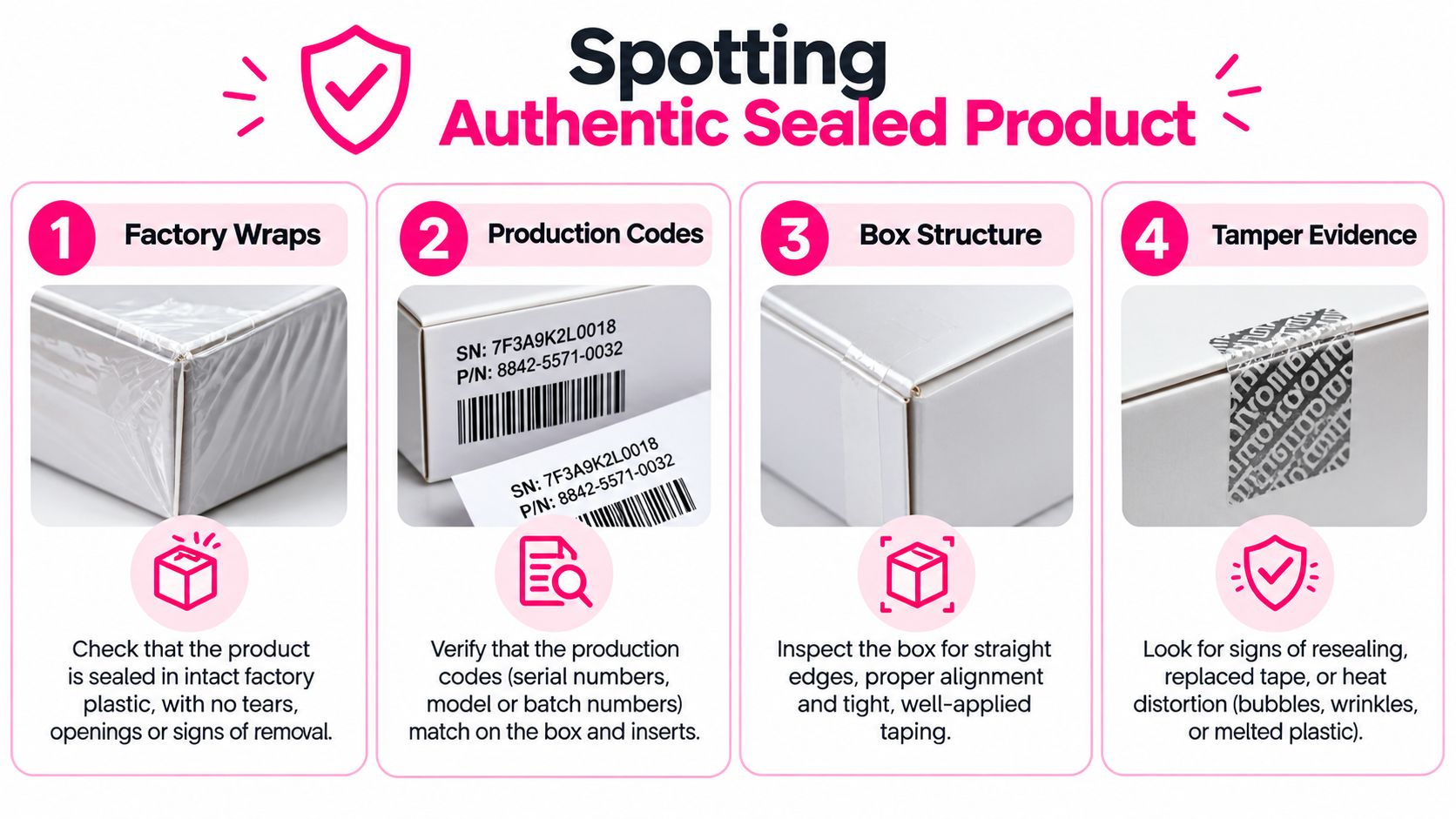
A sealed Allen & Ginter box should look factory-finished, not merely unopened. Secondary-market buyers need to inspect the packaging before they focus on the checklist or hit promise.
Four physical checks
Inspect the shrink wrap. Look for clean, parallel seams and plastic that sits naturally around the box. Wrinkling, cloudiness, loose areas, or heat distortion deserve closer attention.
Examine the production codes. The UPC and production markings should be legible and consistent with the release. If you're comparing a box with a case, mismatched codes are a reason to pause rather than assume the difference is harmless.
Study the box structure. Straight edges, crisp corners, and an undisturbed presentation support the appearance of factory handling. Bent panels, lifted surfaces, or unusual adhesive marks can indicate repackaging.
Check the flaps and glue strips. Sealed flaps should remain intact. Torn paper, fresh-looking glue, or a closure that doesn't sit correctly can suggest that the box was opened and resealed.
Treat the seller as part of the authentication
Packaging inspection can't compensate for a seller who avoids basic questions. Ask for current photographs of the actual box, including the bottom panel and all sides. Stock images tell you what the product should look like, not what you'll receive.
A price far below comparable listings also deserves explanation. It may reflect a legitimate sale, but it can also signal damage, missing packaging, or a product that has been tampered with. Authorized hobby distributors and marketplaces with buyer protection generally give you more recourse than an informal peer-to-peer exchange.
For buyers who want to understand the condition of sealed packaging more closely, this guide to checking a card-product seal offers a useful inspection mindset. Don't cut the wrap until you're satisfied with the box, seller, and purchase protection.
How the Box Performs in Breaks, Auctions, and Resale
Once a hobby box enters the market, it can follow several different paths. A collector may open it personally, a breaker may divide it into team or player spots, or a seller may keep it sealed and wait for a buyer who prefers an unopened product.
Live breaks change the buying experience by separating the box from the individual participant. A host opens the product in real time, assigns cards according to the listed format, and ships each participant's results. The buyer gives up control over which cards appear in their portion, but gains access to a smaller entry into the product.
Three exit paths
Break it. Breaking a box turns sealed inventory into many individual outcomes. The operator must explain the format, shipping, randomization rules, and treatment of unassigned cards. Participants should check whether they are buying a team slot, player slot, random slot, or another defined position.
Hold it. A sealed box is easy to understand and easy to store, but it ties up money and depends on future buyer interest. The packaging must remain clean, and the seller must preserve evidence that the product has not been opened or damaged.
Open and sell singles. Cracking the box creates more work. Cards need to be sorted, photographed, priced, listed, packed, and shipped. Minis, relics, autographs, inserts, and ordinary base cards may appeal to different buyers, so one opening can produce several separate listings.
| Channel | Typical time to sell | Price versus sealed cost | Buyer type |
|---|---|---|---|
| Live break | Can move during a scheduled event | Depends on format and participation | Collectors seeking access to selected spots |
| Sealed auction | Depends on listing exposure and demand | Buyers compare the box with other sealed offers | Rip buyers and sealed-product collectors |
| Individual singles | Varies by subject and card type | Each card finds its own market level | Set builders, player collectors, and hit chasers |
The operating choice should match your holding period and tolerance for effort. A breaker manages audience and fulfillment. A sealed seller manages storage and trust. A singles seller manages condition, inventory, and customer service.
Smart Ways to Approach Your First Box
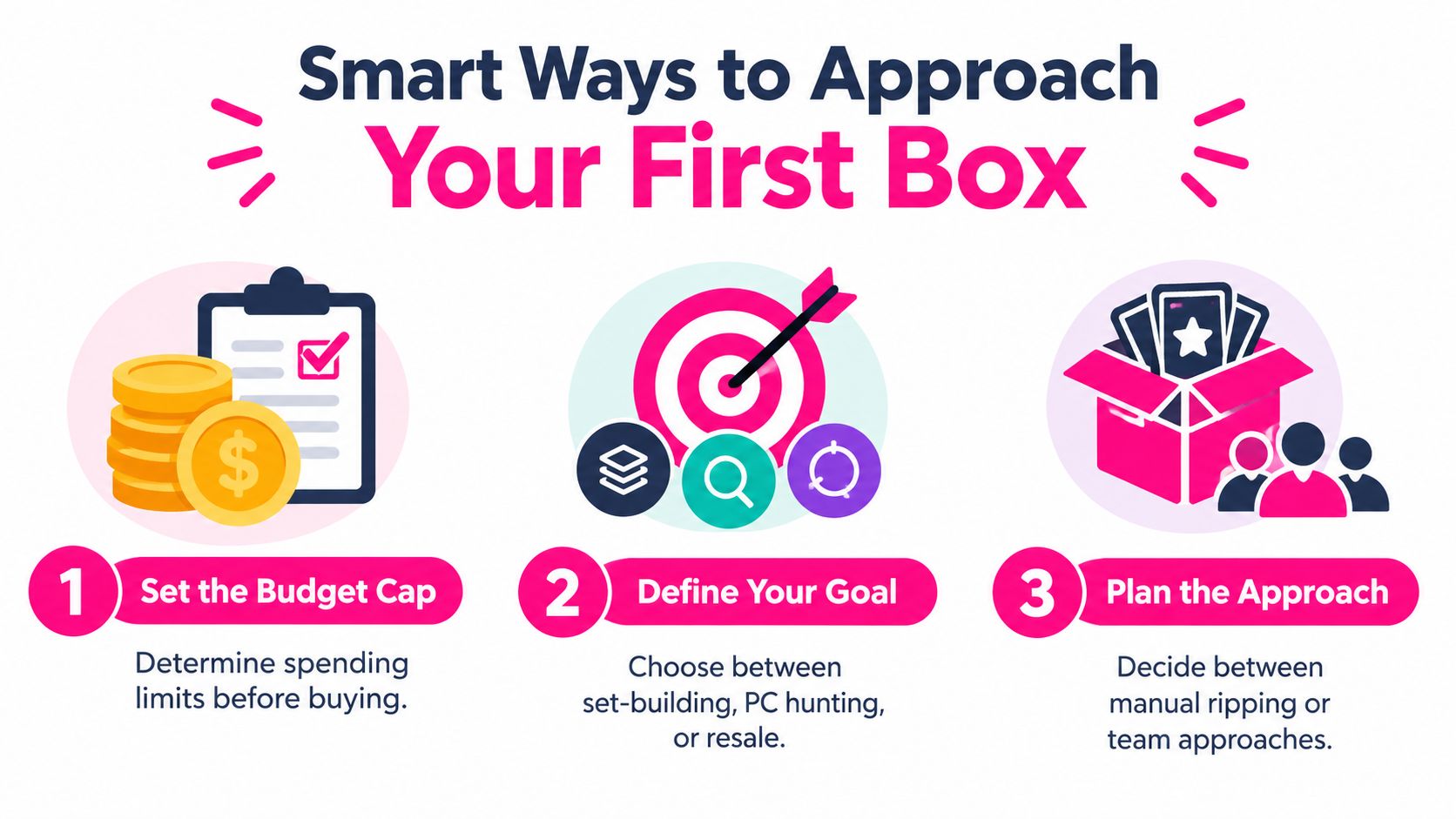
Ripping is fun, but it isn't automatically the best way to reach every collecting goal. Before you buy, decide whether the box is for set building, personal collecting, or resale. The same opening can be a success under one definition and a poor purchase under another.
Set a spending boundary
Choose the maximum amount you're willing to spend before you browse listings. Then compare the hobby format with other available formats by looking at price per pack, included components, and the stated hit structure. A guarantee should inform the decision, not replace it.
Define what would make the opening successful
For a personal collection, success might mean finding a favorite subject or a memorable mini. For a set builder, it might mean adding useful trade material. For resale, the decision depends on whether you can handle sorting, listing, fees, packaging, and unsold inventory.
Plan what happens after the rip
Sort cards immediately and separate hits from base cards, minis, short prints, and inserts. Consider grading only the strongest candidates after checking centering, corners, edges, surface, and likely buyer demand. Most cards are better kept raw unless the condition and collecting interest support the extra cost and waiting time.
If you plan to hold the box, keep it in a stable indoor environment away from direct sunlight, moisture, and pressure that could damage the corners. Photograph the factory seal when you receive it, and retain purchase records so a future buyer can see how the product was handled.
The best first step is to write one sentence before opening the checkout page: “I'm buying this Allen & Ginter box because…” If the answer is the opening experience, enjoy the rip. If the answer is a specific checklist, compare the cost of singles first. If the answer is resale, calculate the work involved before assuming the hits will carry the result.
Lucardio Collectibles brings authenticated singles, sealed products, PSA-graded items, live breaks, real-time auctions, and collection tools together for collectors who want a more organized way to buy and manage cards. Visit Lucardio Collectibles to explore the platform and find the purchasing format that fits your Allen & Ginter goal.