

You paid near-mint money for a raw Umbreon, the photos looked clean, and the card shows up with a soft corner and a whitened edge you can see under a desk lamp. The seller calls that light wear. You call it a PSA 8 on a good day, and now you're arguing over a return instead of enjoying the card.
That gap between what you wanted and what you bought is the problem with most lists of the best cards to collect. A card isn't good or bad on its own. It's good for a goal: holding for years, finishing a set, filling a display shelf, or flipping into something else next month. Each goal tolerates a different amount of condition risk, and each buying route hands you a different amount of that risk.
Sealed product removes grading uncertainty and replaces it with print-run and hype risk. A graded slab removes condition arguments and replaces them with population risk. A raw single is cheapest and leaves every judgement to you. The seven picks below are ranked by the job they do and the risk you absorb, not by price tags or character popularity.
Table of Contents
- 1. Lucardio Collectibles
- 2. eBay
- 3. TCGplayer
- 4. Whatnot
- 5. Pokémon Center
- 6. PSA Vault
- 7. COMC
- How the seven picks compare by best use, buying format, and main trade-off
- Match Each Purchase to a Goal Before You Buy
1. Lucardio Collectibles
The pitch here is consolidation: authenticated singles, sealed booster boxes, and PSA graded cards in one place, with live breaks running alongside weekly drops of authenticated slabs. Every card sold carries a 100% authenticity guarantee, and shipping is insured and trackable.
A quick look at the storefront shows the format mix it's built around.

Why verification belongs in the ranking
Counterfeits are the reason authentication has become a selection criterion rather than a nice extra. Reporting on PSA's fraud work says more than $200 million in fraudulent trading cards and tickets were intercepted in 2025, and that fake Pokémon submissions increased 125%, according to The Athletic's coverage of the PSA fraud report. When you buy a raw chase card from an unknown overseas seller, you're underwriting that risk yourself.
Buying rule: a slab is evidence, not a guarantee. Match the certification number to the grader's database, then compare the label font, hologram, and case seams against known genuine examples before you pay.
What's live and what isn't
- Live breaks: running now, with an on-platform Chief Streamer hosting the action.
- Prize draws: weekly giveaways, with a PSA 10 Moonbreon among the featured prizes.
- Card Vault and Sell Your Collection: both listed as Coming Soon, including the instant cash-out flow for sellers.
- Live Auctions and Community Challenges: also listed as coming soon, so don't plan a purchase around them yet.
Subscribing is free and gets you giveaway entry, early access to drops, and collector updates. For a holder who wants graded inventory with visible condition details and insured delivery, that's a sensible starting point. For a set-completion grinder chasing fifty cheap commons, it isn't the right tool.
Best for: investment-style holding and authenticated display pieces. Condition risk you absorb: low on slabs, moderate on sealed.
2. eBay
A collector with one card to price and no deadline starts with eBay. Raw commons, vintage holos, PSA and CGC slabs, sealed boxes, and full collections all sit in the same search results. That breadth makes it the default place to check what a card sells for, rather than what a seller hopes to get.
Demand here is broad and persistent, and the market supports everything from ordinary singles to headline auction records. The Guinness World Records entry on Pokémon card sales records the most expensive Pokémon card sold at auction, which shows why serious buyers watch completed results, not listing headlines.
For active trading, price discovery comes first:
- Use completed sales, not asks: the eBay price guide builds values from up to two years of completed transactions, including accepted Best Offer prices, and supplements them with PSA and CGC population reports.
- Compare three prices per card: raw, PSA 9, and PSA 10. The spread tells you what condition is worth on that specific card.
- Check the top-grade population trend: a fat PSA 10 premium on a fast-growing 10 population is a supply problem waiting to happen.
Eligible U.S. single-card purchases of $200 or more may route through PSA authentication, which confirms the card is genuine and matches the listing. It doesn't grade or regrade, and sealed packs, boxes, and lots are excluded. Returns follow the individual listing, so read them before bidding. That matters most when condition drives the entire thesis: raw copies demand close inspection, while slabs reduce the dispute to label, grade, and population. Sealed boxes carry a different risk, because box condition and storage history matter even when the contents stay unopened.
On the selling side, compare routes before committing inventory. Our guide on where to sell your card collection walks through the options worth weighing.
Best for: active trading and price discovery. Condition risk: high on raw, low on slabs.
3. TCGplayer
Set completion is a different sport. You need forty specific cards from a specific set in playable condition, not one trophy slab, and TCGplayer is built for that: search by game, set, card number, and seller, then compare a dozen offers on the same printing.
Here's the storefront you'll be filtering through.
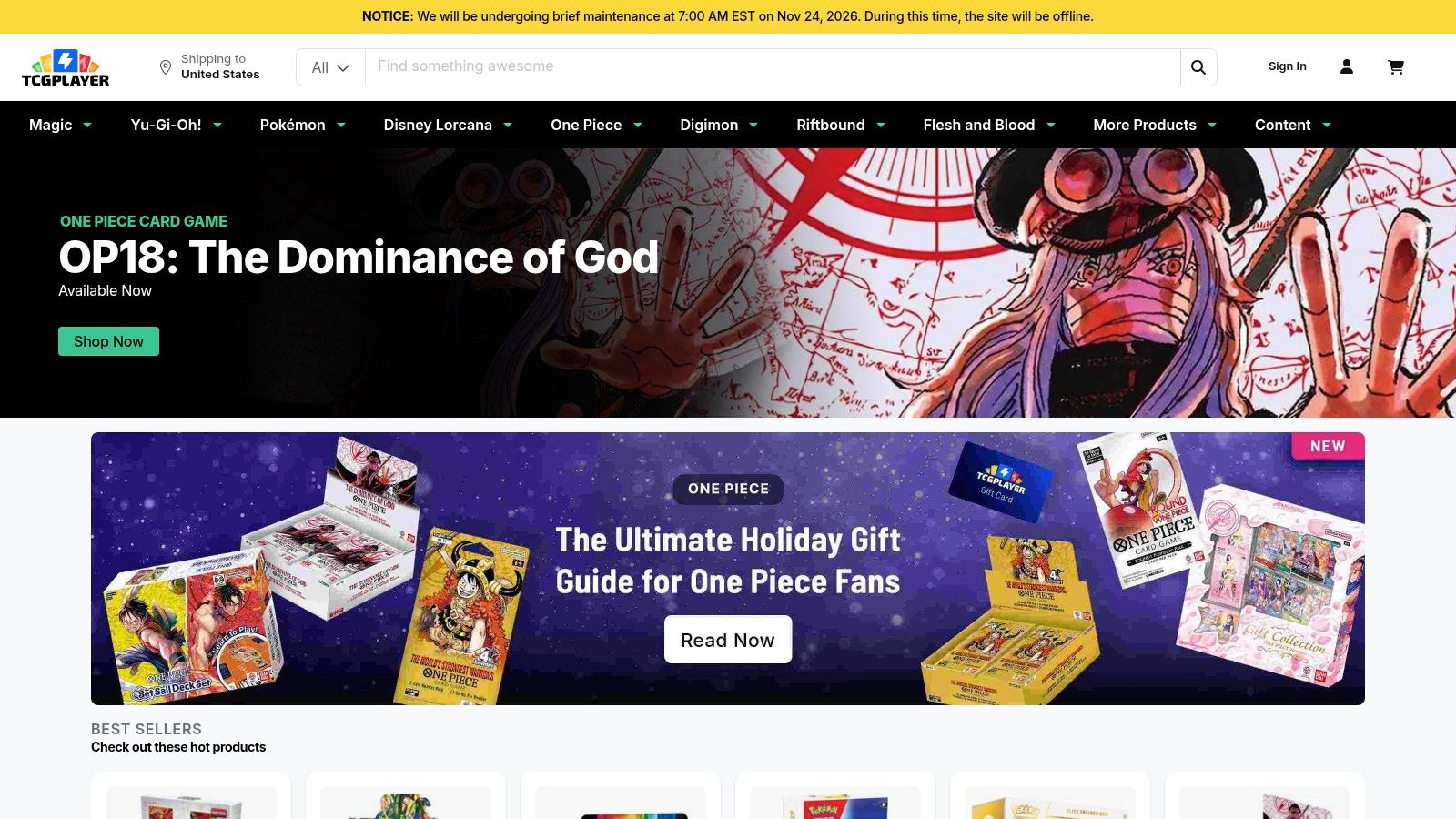
The audience for Pokémon singles is broad rather than niche. 19% of U.S. adults, nearly 1 in 5, bought Pokémon cards for themselves in the six months before Circana's March 2025 survey, as cited in the Pokémon TCG statistics roundup. That depth of buyer base is why liquid, recognizable singles keep finding new homes.
Two fulfilment paths, two risk profiles. Marketplace orders ship from individual sellers, and condition interpretation varies between them. TCGplayer Direct consolidates eligible cards, checks the order against what you bought and the condition stated, and backs qualifying missing or incorrect orders with Buyer Safeguard.
For binder cards and set filler, buy near mint from Direct-eligible sellers and accept that a few will grade lower than you hoped. Save the raw-versus-graded agonising for cards you'd actually insure.
Sports cards and high-end memorabilia aren't the focus here, so don't force it.
Best for: set completion and playable-condition collecting. Condition risk: moderate, and priced accordingly.
4. Whatnot
Live selling is where good cards get bought at bad prices. Whatnot runs Pokémon, sports, graded slabs, sealed product, and breaks through seller livestreams and timed auctions, and you can ask a seller to tilt a card under the light before you bid. That visibility is useful.
The stream format is worth seeing before you commit real money.

The trap is momentum. A tracked Pokémon index rose 44.5% across 6,615 cards in 2025, yet coverage of that year also notes initial price spikes on major releases later leveled out, according to Pokémon Pricing's market trend review. Aggregate gains don't mean the card you won at 11pm on release weekend appreciated.
Practical guardrails that work in a fast room:
- Set a ceiling in writing: open the completed-sales view on your phone and write your max bid before the lot comes up.
- Bid the card, not the room: chat hype and a countdown clock aren't evidence of value.
- Treat breaks as entertainment spending: budget them like a night out, not like an acquisition strategy.
Buyer protection terms are published, but live cancellation and return dynamics differ from a static listing, and stream quality varies wildly by seller. Our live auction bidding strategy covers how to hold a limit when the clock is running.
Best for: active trading and discovery. Condition risk: moderate to high, decided in seconds.
5. Pokémon Center
Buying sealed at the source removes an entire category of doubt. The official Pokémon Center trading card store sells new TCG releases, booster packs, Elite Trainer Boxes, and Pokémon Center exclusives when they're offered, at the store's listed prices, with order tracking and support behind them.
The catalogue is the clearest way to see what a release contains.
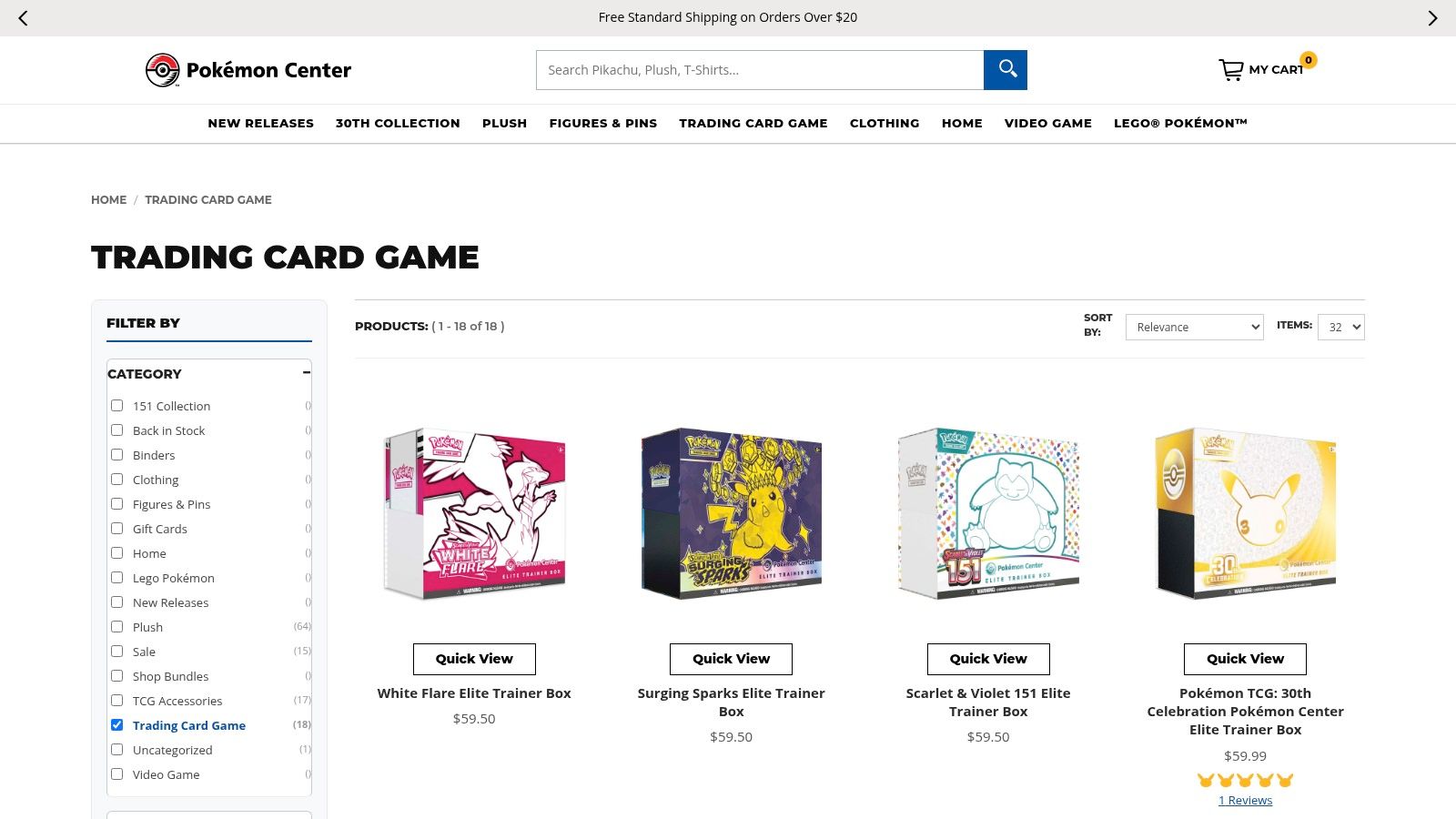
Two policies shape how you should buy here. Popular products sell out, sometimes within minutes, so a launch-day plan beats a browse. And trading cards plus any product containing trading cards are final sale, which means no returning a box because the pulls disappointed you.
That final-sale rule is the whole trade-off in one line. You get authenticity confidence and retail pricing, and you accept that opening a box converts a sealed collectible into a pile of singles whose value you now have to realise individually.
- Hold it sealed: store boxes flat, away from heat and humidity, in a rigid protector, and accept that print runs are large on modern sets.
- Open for the set: treat the box as a set-completion purchase and buy the missing singles separately.
- Skip the resale fantasy: retail restocks are the enemy of sealed premiums.
Our breakdown of Pokémon booster box retail pricing helps you tell a genuine retail number from a marked-up secondary ask.
Best for: sealed holding and set building. Condition risk: low on the seal, total on the pulls.
6. PSA Vault
A graded card can be an investment-style holding only if condition stays stable and the cert stays easy to track. PSA Vault handles that job for eligible graded cards with insured, climate-controlled storage, digital inventory management, and routes to sell through eBay consignment or direct partner offers.
What it looks like once your cards are inside.
Eligibility is narrow: cards graded by PSA, SGC, BGS, or CGC. Raw cards and other holders aren't currently accepted, and withdrawal and early-withdrawal fees apply. That makes the service a poor fit for cards you expect to handle, submit for autographs, or move into a display case soon.
The main risk shifts away from corners and centering once a card is vaulted. It moves to population growth and exit costs. A PSA 10 isn't scarce just because it's a 10. Grade supply can rise, and a high grade only holds meaning relative to the number of copies at that level. I would treat vaulting as a holding decision, not a substitute for buying the right card.
Snapshot the population by grade on the day you buy and save it with the cert number. Scarcity assumptions expire, and your future self needs the original number to judge what changed.
Best for: long-term holding with minimal handling. Condition risk: very low, replaced by population and fee risk.
7. COMC
Selling cards yourself means photographing, listing, packing, and posting every order. Send cards to COMC and the platform handles that labour: it images, lists, stores, packs, and ships them. Buyers shop hosted inventory from many sellers and combine purchases into one shipment, and some cards can be bought, held, and relisted without ever reaching your house.
That last capability is what makes COMC a trading venue rather than a storage shelf. You can rotate through cards without paying postage twice or handling a card enough to soften its corners. For a collecting goal built on active trading, it works like holding a paper position in a physical hobby.
Fees decide whether the math works. COMC charges transaction, cash-out, and shipping fees, so a thin flip can lose money even when the sale price looks like a win. Sports collectors have less room for error than the headlines imply: Gaugius reports U.S. sports-trading-card prices increased 6.2% year over year in 2024, per its sports trading card industry statistics. A modest market rise does not rescue a card where the combined costs exceed the spread you bought at.
- Run the fee stack first: transaction fee, cash-out fee, and shipping before you call anything profit.
- Batch your submissions: consolidation is where the savings live.
- Don't expect live commerce: this isn't the place for breaks or new sealed Pokémon drops.
Best for: active trading and low-effort liquidation. Condition risk: low once hosted, with fees as the main cost.
How the seven picks compare by best use, buying format, and main trade-off
Read the best-use column as the collecting goal, then read the trade-off as the condition risk and friction you accept.
| Item | Best for | Buying format | Main trade-off |
|---|---|---|---|
| Lucardio Collectibles | Event-led buying: live breaks, weekly prize draws, sealed products, and authenticated or PSA-graded cards | Live breaks and weekly prize draws now; Live Auctions, Card Vault, Sell Your Collection, and Community Challenges are listed as Coming Soon | Strong for buying into live events now, but auctions, storage, selling, and challenges still depend on launch timing |
| eBay | Finding specific cards and comparing a wide range of listings | Auctions and fixed-price listings | Authentication applies only to eligible purchases |
| TCGplayer | Buying individual trading-game cards by set, card, or condition | Marketplace listings and eligible TCGplayer Direct orders | Seller fulfillment varies, and Direct covers only eligible listings |
| Whatnot | Discovering cards through interactive livestreams | Live auctions, streams, and card breaks | Bidding is fast-paced, and selection depends on sellers and shows |
| Pokémon Center | Buying official new Pokémon TCG products | Direct online purchase of sealed products | Products may sell out, and card purchases are final sale |
| PSA Vault | Storing and selling eligible graded cards | Vault storage, eBay listings, or partner offers | Limited to eligible graded cards; withdrawal fees apply |
| COMC | Buying multiple hosted cards or consigning cards for sale | Marketplace purchases and consignment | Fees and shipping costs can add up |
Match Each Purchase to a Goal Before You Buy
Sort your next purchase into one of four buckets before you look at a single listing. Holding means graded, authenticated, insured, and stored where you won't handle it. Set completion means near-mint raw singles bought in batches from sellers with published protections. Display means one card you love, in a slab or a rigid holder, where the grade matters less than the artwork. Trading means liquid cards with dense recent sales and a fee structure you've already calculated.
Condition tolerance follows the bucket, not the card. A binder card can be a 7 and still be a perfect purchase. A card you're holding for a decade can't, because you'll be selling into a market that prices the difference precisely.
The clearest illustration of that precision sits at the top of the market. Guinness World Records lists a PSA Gem Mint 10 1998 Pikachu Illustrator bought privately for $5,275,000 on July 22, 2021, and a PSA 9 example of the same card sold for $2 million on December 14, 2023, in its record listing for valuable Pokémon cards. Different years, different venues, so it isn't a clean grade-only comparison. It's still a reminder that one grade point can move a price more than most collectors' entire budget.
You don't need a trophy card to apply the lesson. You need to know which risks you're taking and which ones you've paid someone else to remove. Authentication removes counterfeit risk. Grading removes condition arguments. Insured shipping removes transit loss. Vaulting removes handling damage. None of them remove the risk of overpaying during a hype window, and that one is entirely on you.
Do this much this week: write your top three collecting goals on one line each, then list every card you're currently watching beside the goal it serves. For each one, note the format (raw, graded, sealed), the last three completed sale prices, the top-grade population, and the buying route's protection. Any card that doesn't match its goal gets deleted from the watchlist, not bought at a discount.
We built Lucardio Collectibles to put authenticated singles, sealed booster boxes, and PSA graded cards in one place, with a 100% authenticity guarantee, insured trackable delivery, live breaks, and weekly prize draws featuring slabs like a PSA 10 Moonbreon. If you're matching purchases to goals rather than chasing whatever's trending, our drops and upcoming Card Vault are designed for exactly that kind of collecting. Visit Lucardio Collectibles and subscribe free for giveaway entry, early access to new drops, and collector updates.