
A community challenge isn't automatically engaging because it has a prize. In a 2025 American survey, 39% of Americans identified drug abuse and addiction as a major problem in their community, while 37% identified affordable housing that way, showing how participation usually grows around issues people understand and care about, not around activity for its own sake American Survey Center community findings. Collectors follow the same principle. A challenge works when it gives them a clear mission, visible progress, fair verification, and a reason to return.
The ten community challenges examples below compare collector-specific formats by objective, proof requirements, reward design, accessibility, and fit with Lucardio features such as Card Vault, live breaks, auctions, and prize draws. The list moves from collection milestones and live participation to seller performance, grading, giveaways, sealed breaks, themed collecting, referrals, trading, and education. The conclusion then turns those formats into a practical launch sequence.
Table of Contents
- 1. Collecting Milestone Challenges
- 2. Live Break and Auction Participation Streaks
- 3. Authenticated Seller Challenges
- 4. Grade Progression and Slab Tier Challenges
- 5. Prize Draw and Giveaway Completion Tasks
- 6. Sealed Product Break Mastery Challenges
- 7. Collection Diversity and Theme Challenges
- 8. Referral and Recruitment Challenges
- 9. Trading and Vault Exchange Challenges
- 10. Educational Mastery and Collector Knowledge Challenges
- 10 Community Challenge Types Compared
- Turn Participation Into a Repeatable Community Loop
1. Collecting Milestone Challenges
Milestone challenges give collectors a finish line they can see. A Pokémon TCG Base Set completion challenge, a multi-set franchise challenge, or a target based on graded cards can turn an unstructured buying habit into a visible collecting project.
The strongest version uses progressive tiers, not one winner-takes-all endpoint. A collector might earn recognition after adding a first group of qualifying cards, receive a second reward after completing a set segment, and reach a premium tier only after finishing the full objective. Lucardio's Card Vault is a natural place to display the qualifying cards, identify gaps, and show progress without forcing members to maintain a separate spreadsheet.
Verification needs to be strict enough to protect fairness. Define which editions, languages, grades, and card conditions qualify before the challenge starts. A Base Set completion format has different difficulty from a “complete any three Pokémon sets” format, so combining them on one leaderboard would reward access to inventory rather than collecting discipline.
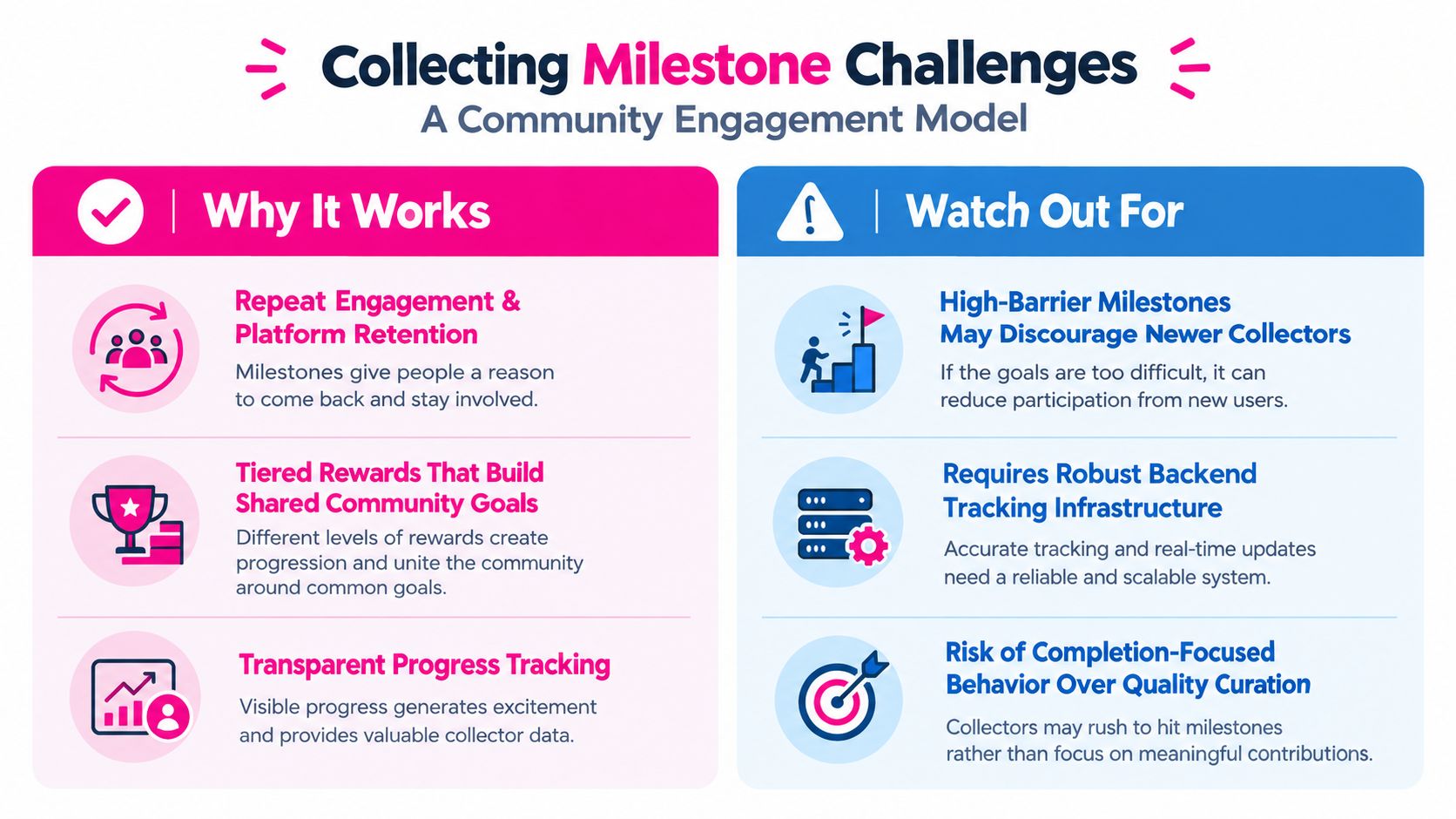
Practical rule: Reward progress as well as completion. Participation rewards keep newer collectors involved while top tiers give experienced collectors something worth pursuing.
Monthly resets can keep the format competitive and give new members a fair entry point. Weekly leaderboard snapshots through email notifications, consolation rewards, and rewards such as early-access drops or exclusive auction access can sustain interest without making the challenge dependent on a single expensive purchase.
2. Live Break and Auction Participation Streaks
Streaks suit collectors who enjoy returning to a live event at a predictable time. A “7-Day Breaker” badge, a four-week auction participation status, or a monthly live-engagement tier rewards consistency, not the value of a winning bid.
The trade-off is accessibility. A challenge that requires daily attendance excludes collectors in different time zones, people with irregular schedules, and members who prefer watching rather than bidding. Offer an asynchronous route through recorded break replays, and define whether attendance means opening the stream, watching for a minimum period, commenting, or placing a bid. These actions shouldn't be treated as interchangeable because bidding carries financial intent while attendance may just reflect community interest.
Grace periods are useful. Missing one event shouldn't necessarily erase a long streak, especially when the objective is habit formation rather than pressure to spend. Badges, stream shout-outs, giveaway entries, and access to future drops can recognize participation without turning every check-in into a purchase.
A collector who follows a sealed-product discussion before joining a future event may need context on the inventory itself. Lucardio's guide to the Mosaic Mega Box can support that discovery without making educational reading a hidden condition of entry.
Use reminders carefully. Active participants may only need a weekly summary, while less active members benefit from a clear notification that explains what they need to do next. Streak leaders can be announced during live streams, but public rankings should never shame people who miss a session.
3. Authenticated Seller Challenges
Seller challenges should reward quality and reliability, not just the largest inventory. A monthly “Graded Specialist” format could recognize the seller who lists the strongest selection of PSA-certified items. An “Authentication Master” format could recognize accurate documentation and clean transaction records, provided the rules account for transaction volume and dispute-handling context.
The first requirement is transparent opt-in. Sellers need to know how qualifying activity is measured, which records are reviewed, and how appeals work. A leaderboard based only on raw sales volume will favor established sellers and can encourage aggressive discounting. A leaderboard based only on speed can reward incomplete listings or weak condition descriptions.
A better design separates objectives:
- Supply contribution: Recognize useful, well-described inventory that expands collector choice.
- Trust behavior: Reward accurate photographs, certification details, and responsive issue resolution.
- Collection liquidity: Highlight sellers who use Lucardio's sell-your-collection flow to move inventory efficiently.
- Community contribution: Feature seller knowledge, collection stories, and practical listing guidance.
Avoid promising fee reductions or cash rewards unless the platform can sustain them. Recognition, early-access inventory, break-slot partnerships, and seller spotlights can support status without distorting pricing behavior. If financial incentives are used, publish the terms clearly and keep them consistent across seller sizes.
Seller stories add important context. A collector liquidating inherited cards has a different objective from a specialist building a graded inventory business. Lucardio can use authentication and instant cash-out workflows as part of the challenge experience, but the judging criteria must remain understandable to both groups.
4. Grade Progression and Slab Tier Challenges
Grade progression challenges appeal to collectors who enjoy a defined ladder. One member may work toward a PSA 8 collection, another may pursue PSA 9 examples, and a specialist may build a focused PSA 10 subset. The format works because every qualifying acquisition produces a visible step, while the Card Vault can connect the achievement to a specific item.
The main risk is turning a condition-focused challenge into a spending contest. High grades can be scarce, and collectors shouldn't feel that lower-grade cards are failures. Build several entry paths, such as grade bands or set-specific ladders, so the challenge recognizes improvement and curation rather than only the highest slab.
A useful grade challenge teaches collectors how to judge condition while it rewards them for applying that knowledge.
Verification should rely on visible certification and clearly defined eligibility. If submissions or raw cards are included, state how grading outcomes are treated and who verifies them. Educational content matters here because collectors need a shared understanding of centering, corners, edges, surface condition, and the limits of any grade label. Lucardio's explanation of graded card prices can sit alongside the challenge as context, not as a promise that a higher grade guarantees a particular financial outcome.
Rewards can include profile badges, community spotlights, access to selected draws, or entry to a sealed-product event. Linking progression to breaks may encourage collectors to explore unopened inventory, but it shouldn't imply that opening product is a reliable route to a target grade. Keep the distinction between collecting entertainment and financial expectations explicit.
5. Prize Draw and Giveaway Completion Tasks
Task-based draws are effective for feature discovery because they let members earn entries through different kinds of participation. A collector might add items to Card Vault, share a collection profile, attend a live auction, or complete account information. Each action introduces a platform feature without requiring every participant to buy something.
The design must make progress easy to audit. Show the task list, entry tally, closing time, and eligibility rules in one place. If a task awards entries for adding cards, define whether duplicate records count, whether the item must be authenticated, and whether deleted entries remain eligible. Clear rules protect trust, especially when the headline prize is a coveted slab such as a PSA 10 Moonbreon.
Use a mix of effort levels:
- Low-friction actions: Complete a profile or visit a collection page.
- Collection actions: Add and organize qualifying items in Card Vault.
- Community actions: Share a collection or participate in an auction discussion.
- Commerce actions: Place a bid or make a purchase, where applicable.
Don't let paid actions dominate the draw. Otherwise, the format becomes a sales promotion rather than a community challenge, and collectors with limited budgets lose a meaningful route to participate. Smaller recurring prizes can make the format feel active, while winner spotlights can show that the draw is administered fairly.
A rotating task set prevents members from repeating one easy action indefinitely. Bonus weeks can add variety, but the platform should disclose any limits, multipliers, and exclusions before members act. The best reward design makes new features useful even when a participant doesn't win.
6. Sealed Product Break Mastery Challenges
Break challenges should celebrate the live experience while keeping chance, spending, and recognition separate. Possible formats include attending a series of breaks, winning cards from different sealed product types, or earning a spotlight for a memorable team-lot result. The first option measures participation. The second measures collecting breadth. The third celebrates community moments without pretending that luck is skill.
A “Break Devotee” format can reward attendance milestones with platform credit or a badge, while a themed challenge can invite collectors to explore Pokémon, sports, or other sealed categories. Lucardio's guide to sealed packs can help participants understand what they're joining before they enter a break.
Verification is straightforward when the platform records event attendance and awarded lots, but odds and outcomes must be transparent. Publish the product configuration, define how randomization works, and preserve an auditable record of results. A challenge should never suggest that participating more often improves the odds of a specific hit unless the rules explicitly support that claim.
Fairness check: Reward showing up separately from winning. Luck can create excitement, but it shouldn't determine who receives all recognition.
Accessibility also requires limits. Daily participation caps, clear spending prompts, and non-purchase attendance badges can reduce pressure to chase outcomes. Recorded event recaps help members stay connected when they can't attend live. During streams, hosts can celebrate wins, answer questions, and recognize consistent participation without framing expenditure as status.
Sealed inventory discounts may deepen engagement, but they need clear conditions. The challenge should remain understandable to collectors who are there for the social event as much as the product.
7. Collection Diversity and Theme Challenges
Not every collector wants to chase the highest grade or compete on spending. Theme challenges create room for personal taste: an Era Explorer can gather cards across Pokémon TCG eras, a Character Companion can focus on one Pokémon, and a Rainbow Collection can explore different rarity treatments.
This format is more accessible when the theme is broad enough to support different budgets and collection sizes. “Build a collection around one favorite character” gives members creative control. “Acquire a fixed list of scarce cards” turns the same idea into an inventory-access contest. Set a clear definition of completion, but allow collectors to explain why their selection fits.
Card Vault can serve as both proof and presentation. Members can group qualifying cards, add notes, and share the finished theme with the wider community. That creates a social reward even when the formal prize is modest. A weekly spotlight can feature an unusual curation choice rather than only the largest or most expensive collection.
Useful mechanics include:
- Community voting: Let members propose or select future themes.
- Search guidance: Provide filters for era, character, set, rarity, and grade.
- Completion rewards: Offer badges, entry points, or discounts for finishing a theme.
- Status benefits: Give completed themes access to selected drops or community features.
The trade-off is judging subjectivity. Avoid ranking creativity with a single opaque score. Use completion for objective rewards and separate community voting for presentation or storytelling. That keeps the rules fair while preserving the personality that makes themed collecting enjoyable.
8. Referral and Recruitment Challenges
Referral challenges turn existing collectors into community guides. A member may invite a friend, help that person complete a profile, or introduce them to Card Vault and live events. The important distinction is between a qualified introduction and a raw signup. A referral program that rewards empty accounts will produce activity without a community.
Require the new member to complete a meaningful onboarding action, such as organizing a collection, joining an event, or completing a first legitimate transaction. Explain the condition before the referral is sent. Both people should understand when a reward becomes available, whether there are limits, and how duplicate or self-referrals are handled.
The most effective rewards support future participation. Credit can be useful, but badges, early-access opportunities, community recognition, and invitations to collector events can also give ambassadors a reason to keep helping. Keep the reward modest and achievable so the referral feels like a recommendation rather than a sales script.
Give referrers practical tools:
- Personal referral link: Remove the need to explain tracking mechanics.
- Suggested messages: Offer versions for a collecting friend, a seller, and a live-break viewer.
- Onboarding prompts: Show the new member one useful next action.
- Ambassador profile status: Make trusted advocates visible without overstating expertise.
Recruitment can damage trust if members feel pressured to invite people who aren't interested in collectibles. Align campaigns with relevant drops, new features, or community events, and let members opt out of promotional notifications. Growth is useful only when the new collector finds a genuine reason to return.
9. Trading and Vault Exchange Challenges
Trading challenges create social depth beyond buying and selling. A “Trade Initiate” format can recognize completed peer trades, while a “Fair Dealer” badge can recognize consistently positive feedback. A themed trade quest might ask members to exchange toward a particular Pokémon, era, grade, or set category.
The operational burden is higher than with a Card Vault completion challenge. The platform needs clear offer mechanics, image requirements, condition disclosure, valuation guidance, and a dispute path. A positive rating alone isn't enough if members can't inspect what changed hands or resolve a disagreement about condition.
Use modest rewards that reinforce interaction rather than speculation. Profile badges, collection features, and small platform benefits can be more appropriate than large financial incentives. The challenge should make a fair trade feel valuable even when the cards have different market prices.
Trust is the product in a peer exchange. Points can't compensate for unclear condition, weak documentation, or an unresolved dispute.
Image verification should show front, back, corners, edges, and any relevant flaws. Certified slabs need visible identification, while raw cards require especially careful descriptions. A trusted-trader badge should reflect a defined record and should be removable when behavior changes.
Seasonal trade events can focus attention, but avoid forcing members into a narrow theme. A collector may have a valuable duplicate that doesn't match the current quest, while another may be seeking a modest card to finish a personal set. Good challenge design leaves room for both.
10. Educational Mastery and Collector Knowledge Challenges
Educational challenges reward the behavior that makes every other community format safer. Members can complete grading lessons, authentication tutorials, market-reading modules, or collector interviews, then demonstrate understanding through quizzes, examples, or discussion.
This format is strongest when knowledge delivers a practical capability. Completing an authentication module might open up a more detailed listing workflow. Finishing a grading lesson could earn a profile badge and access to a condition-focused live session. The reward should help members apply what they've learned rather than just decorate a profile.
A collector preparing for a purchase can study grading standards before joining a grade progression challenge. A seller can learn how to document condition before listing an authenticated card. A live-break viewer can use product education to understand what a sealed format includes. These connections make education part of the collecting journey, not a separate course library that members forget.
Build each assessment around real decisions:
- Identification: Distinguish an authentic certification record from an incomplete listing.
- Condition: Identify visible defects in a sample card image.
- Disclosure: Write a listing description that doesn't hide material flaws.
- Application: Explain why a chosen card fits a collection theme.
Founder interviews, expert Q&As, and downloadable certificates can add recognition, but credibility depends on accurate content and clear limitations. Avoid presenting market education as a promise of profit. The aim is informed participation, better questions, and stronger trust between collectors, sellers, and the platform.
10 Community Challenge Types Compared
| Challenge | 🔄 Implementation Complexity | ⚡ Resource Requirements | 📊 Expected Outcomes | 💡 Ideal Use Cases | ⭐ Key Advantages |
|---|---|---|---|---|---|
| Collecting Milestone Challenges | 🔄 Medium, Card Vault integration + verification | ⚡ Medium, backend tracking, leaderboards, email | 📊 ↑ retention, authenticated purchases, collector data | 💡 Seasonal set completions, community progress goals | ⭐ Encourages repeat engagement; clear progress visibility |
| Live Break & Auction Participation Streaks | 🔄 Medium‑High, real‑time hooks, badge & multiplier logic | ⚡ High, live infra, notification systems, profile badges | 📊 ↑ live attendance, longer view times, predictable scheduling | 💡 Regular live breaks/auctions to build habitual visits | ⭐ Boosts live commerce and habitual engagement |
| Authenticated Seller Challenges | 🔄 Medium, seller metrics, leaderboards, fraud safeguards | ⚡ Medium, marketplace analytics, featured storefronts | 📊 ↑ authenticated inventory, seller retention, transparency | 💡 Scaling authenticated listings and seller recognition | ⭐ Increases quality inventory and marketplace trust |
| Grade Progression & Slab Tier Challenges | 🔄 Medium, grade aggregation, Card Vault grade filters | ⚡ Medium, PSA inventory access, analytics, tier rewards | 📊 Drives premium purchases and status signaling | 💡 High‑value, grade‑focused campaigns and collectors | ⭐ Aligns brand with high‑grade acquisition and status |
| Prize Draw & Giveaway Completion Tasks | 🔄 Low, point system, progress bars; add fraud checks | ⚡ Low, task UI, draw engine, communication tools | 📊 Broad feature adoption and increased session frequency | 💡 Onboarding, feature adoption, low‑barrier engagement | ⭐ Low friction; democratizes participation by effort |
| Sealed Product Break Mastery Challenges | 🔄 Medium, break recordkeeping + outcome transparency | ⚡ Medium, live break ops, streamer coordination | 📊 ↑ break revenue, increased live viewership, excitement | 💡 Platforms focused on sealed product breaks and streams | ⭐ Drives revenue and emotional community moments |
| Collection Diversity & Theme Challenges | 🔄 Low, theme templates, showcase UI, voting | ⚡ Low, curation tools, spotlight features, moderation | 📊 Broader discovery, inclusive community growth | 💡 Diversifying collector base; highlighting niche inventory | ⭐ Encourages exploration beyond grade‑chasing |
| Referral & Recruitment Challenges | 🔄 Medium, referral tracking, verification workflows | ⚡ Low‑Medium, tracking dashboard, rewards, messaging | 📊 Organic user growth with stronger retention | 💡 Early‑stage expansion; lowering acquisition costs | ⭐ Low‑cost acquisition; builds community advocacy |
| Trading & Vault Exchange Challenges | 🔄 High, peer‑to‑peer flows, trust scores, dispute resolution | ⚡ High, moderation, escrow/verification, trade UX | 📊 Increased peer interaction; stronger stickiness | 💡 Social collectors and inventory diversification use cases | ⭐ Strengthens community bonds and social commerce |
| Educational Mastery & Collector Knowledge Challenges | 🔄 Medium, content production, quizzes, tracking | ⚡ Medium‑High, content dev, expert contributors, platform hosting | 📊 More informed collectors; community leadership; lower support load | 💡 Long‑term trust building, onboarding, advanced user features | ⭐ Positions platform as authority; builds knowledgeable users |
Turn Participation Into a Repeatable Community Loop
The right format depends on the behavior you want to strengthen. Use milestone and theme challenges when the priority is collection depth, curation, and Card Vault activity. Use streaks and break challenges when live attendance matters. Use task-based draws to introduce features such as profiles, vault organization, auctions, and notifications. Use referral challenges for qualified acquisition, seller formats for supply, and educational or trading challenges for trust.
Don't launch all ten at once. A community can become confused when every action carries a badge, point value, or leaderboard position. Start with one objective that can be measured without ambiguity. If the objective is collection completion, count qualifying cards. If it's live attendance, define attendance. If it's seller quality, publish the review criteria before the first participant opts in.
An accessible entry tier matters. A challenge that only experienced collectors can finish will produce impressive screenshots but limited community growth. Add a participation route for members with smaller collections, less free time, or no interest in buying. Recognition can include badges, spotlights, educational access, or a place on a community showcase, not only expensive inventory or cash-equivalent rewards.
Verification should match the risk. Card Vault additions may need item eligibility rules. Break challenges need auditable outcomes and clear odds. Trading challenges need condition evidence and dispute handling. Referral challenges need meaningful onboarding conditions. The more valuable the reward, the more carefully the platform should document qualifying actions and publish the decision process.
A reliable launch sequence looks like this:
- Define one objective: Choose collection depth, live attendance, supply, acquisition, trust, or feature discovery.
- Set an entry tier: Give newer and lower-budget collectors a credible way to participate.
- Publish the rules: Explain timing, eligibility, verification, limits, and rewards before launch.
- Track visible progress: Show personal status and, where appropriate, a fair leaderboard.
- Recognize the middle: Use reminders, recaps, spotlights, and progress rewards before the finish.
- Review behavior: Look at completion quality, repeat participation, accessibility, and complaints before expanding.
Community design also needs operational realism. A 2020 systematic review identified 48 separate barriers to participation in participatory decision-making, including low awareness, weak communication, limited trust, and missing participation mechanisms systematic review of community engagement barriers. In practical terms, a challenge can fail because members don't understand it, can't verify their progress, don't trust the judging, or lack a convenient way to take part. The reward can't repair a confusing workflow.
Research on community-building also points to a less obvious problem, people may stay away because they don't feel connected to the issue or don't have enough information to decide. Recent engagement reporting found that 29% of residents cited a lack of strong feeling about the issue and 24% cited insufficient information as reasons for not engaging 2026 civic engagement findings. For collectors, that means a shorter, clearer challenge with visible progress may outperform a louder promotion with a bigger prize.
The strongest evidence for gamification is not a signup spike. A coin-collector community reported a 51.5% return rate, community members opened its app 3× more often than non-community users, and the program recorded 1.35M post views, 20,200 messages, and a 128% month-over-month increase in poll voting after adding points, levels, and badges coin-collector community app case study. Those figures don't guarantee the same outcome for a trading-card platform, but they show why progression mechanics should be connected to meaningful activity such as organizing collections, attending events, sharing knowledge, and trading fairly.
The best challenge doesn't reward the most activity. It rewards the collector behavior that makes the community more useful, trustworthy, and worth returning to.
Lucardio Collectibles brings authenticated singles, sealed products, PSA-graded items, Card Vault management, live breaks, auctions, prize draws, and collection-focused community features into one platform. Use the formats above as a design brief, then choose the challenge that helps collectors do something valuable together.
Lucardio Collectibles offers authenticated trading cards, sealed products, PSA-graded inventory, Card Vault collection management, live breaks, auctions, and prize draws in one destination. Visit Lucardio Collectibles to explore the platform and follow upcoming community challenges, drops, and live events.