
The UK's prize-draw sector is worth £1.3 billion a year, attracts approximately 7.4 million adult participants, and includes more than 400 operators, according to research commissioned by the UK Department for Culture, Media and Sport. Prize draws and competitions have moved well beyond casual internet raffles. For card collectors, they're now part of a wider ecosystem involving authenticated singles, sealed products, graded slabs, live breaks, auctions, and community events.
That scale also creates responsibility. A collector considering a high-value prize needs more than an attractive image and a “winner announced soon” message. You need to understand the entry route, eligibility rules, selection process, audit trail, and what happens after the announcement. A fair competition should make those details easy to find before you enter, not force you to reconstruct them afterward.
Table of Contents
- How Collectible Giveaways Have Evolved
- How Entry Mechanics and Eligibility Work
- Verifying Fairness and Randomness in Digital Draws
- Historical Roots of Transparent Prize Structures
- Navigating Post-Win Security and Fulfillment
- Building Long-Term Community Engagement
How Collectible Giveaways Have Evolved
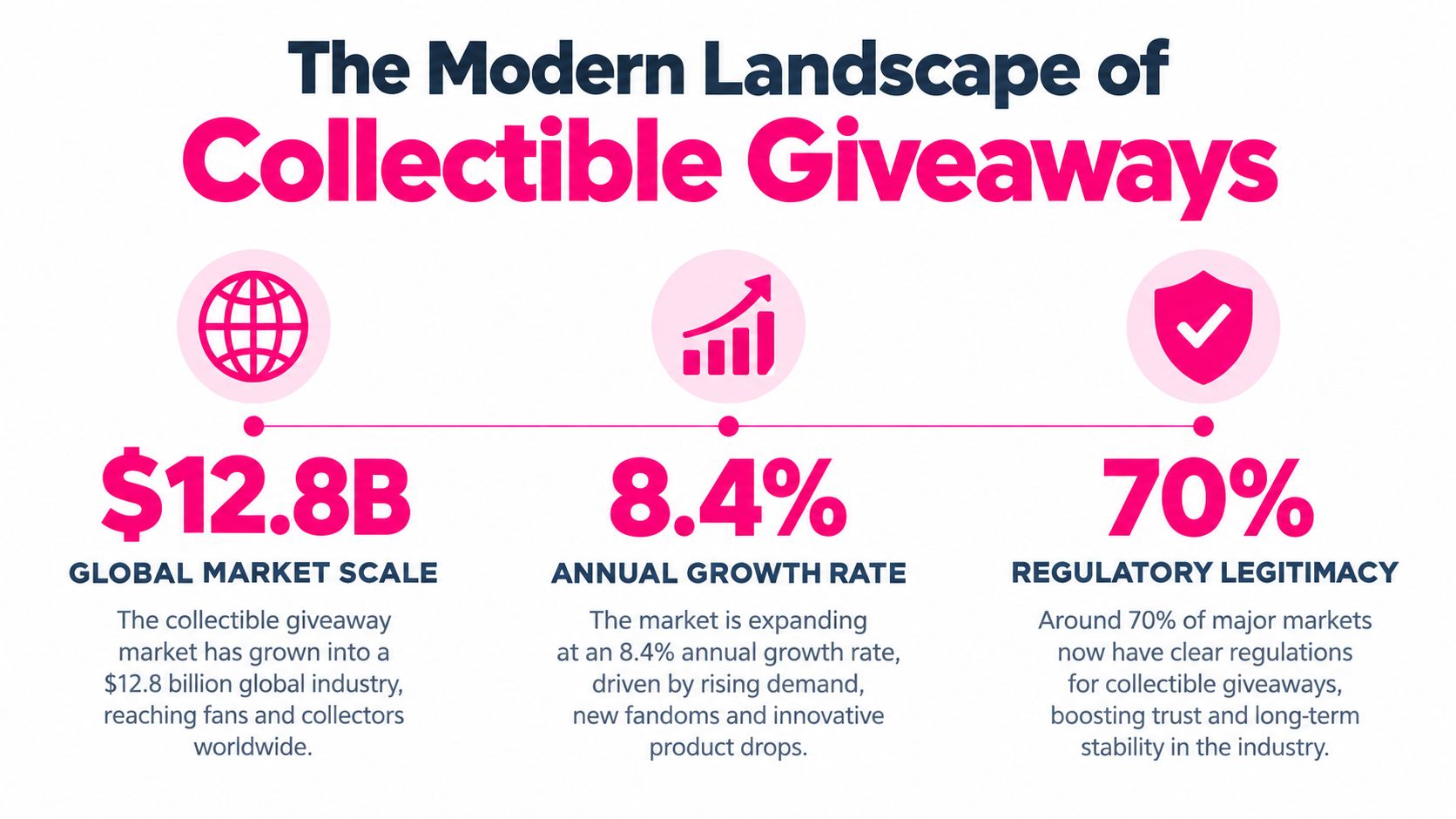
£1.3 billion a year, 7.4 million adult participants, and more than 400 operators give the UK prize-draw sector real weight. For collectors, that matters because a card giveaway is no longer just a bit of forum excitement. It often sits inside a wider market that includes graded singles, sealed products, live breaks, auctions, and collector communities. Research linked to the DCMS voluntary code and supporting research also found that 88% of prize-draw participants had taken part in commercial gambling activities or lotteries during the preceding 12 months, compared with 60% of adults in the general population.
A modern giveaway works a bit like a chain of custody for a collectible. The visible part is the prize photo and the winner announcement. The part that protects trust is everything behind it: how entries are logged, how the selection method can be checked, and what record remains after the draw. Collectors often focus on whether the prize looks desirable. Experienced entrants also ask whether the process would still make sense if they had to verify it after the fact.
Why collectibles need stronger transparency
Collectible prize draws usually offer paid and free entry routes. That structure can be legitimate, but only if the promotion stays clearly separated from an illegal lottery and follows the rules around free entry and promotional mechanics. For a collector, the practical point is straightforward. Familiar community energy does not replace written rules.
Those rules should cover the prize, eligibility, closing time, entry recording, and winner contact method. They should also make clear whether buying anything is optional, whether extra entries exist, and whether age or location limits apply. If those details are vague before the draw, confidence after the draw will be weak, even if the operator believes the selection was fair.
That distinction matters with higher-value items. A graded slab is not just “a Charizard” or “a rare pull.” The listing should identify the set, card number, grading company, grade, and visible condition details where relevant. Collectors comparing scarcity or checking whether a prize description is precise can use resources such as this guide to Pokémon card rarity.
Clear structure also helps with the less glamorous part of winning: privacy, shipping, customs, and secure handling. A fair draw is only half the story. The other half is whether the operator can deliver a valuable collectible safely, with enough documentation to protect both the winner and the item.
How Entry Mechanics and Eligibility Work
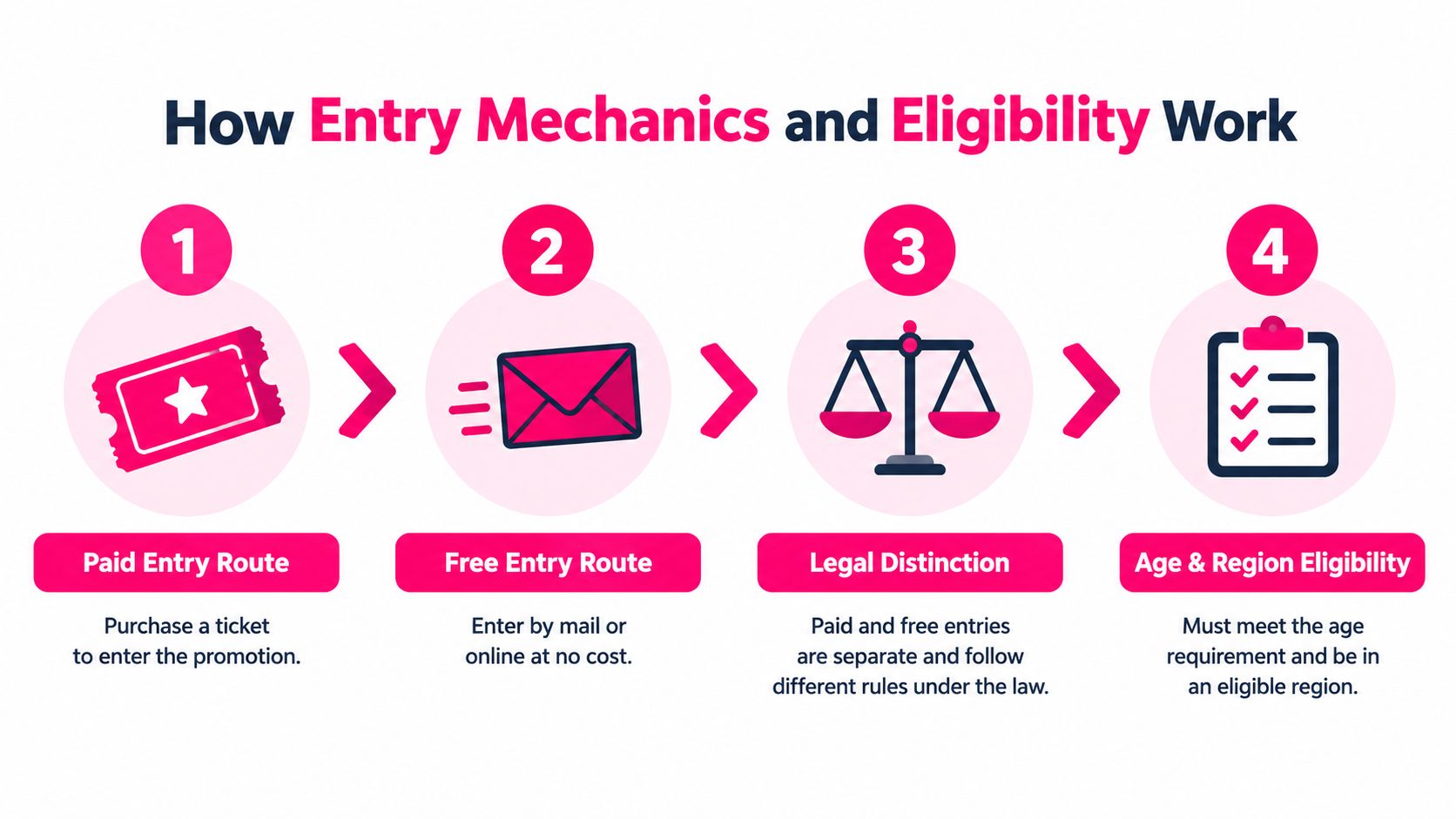
Before you enter any digital competition, you should be able to answer four plain questions without having to decode chat messages, stream hype, or comments from other collectors. First, what action creates an entry? Second, is there a free route, and is it equivalent on paper and in practice? Third, who can enter? Fourth, what happens if an entry is duplicated, incomplete, or ruled invalid?
Those questions form the collector's paper trail. If the process is clear before the draw closes, it is much easier to check later that the winner came from the right pool.
Paid entry might come through a product purchase, event participation, or another route the operator spells out clearly. A free route may use a form or postal method. What matters most is whether the free route is presented clearly and handled according to the published rules, with the same closing point, the same eligibility standards, and a clear record of how entries are counted. For higher-value prizes, that audit trail matters as much as the excitement of entering.
Read the entry terms before joining
The terms page should connect every community touchpoint to the actual entry mechanics. A live break may announce the draw. An email may tell you entries are open. A challenge or purchase may relate to participation. None of those signals should leave you guessing about whether watching, buying, subscribing, or completing a task creates an entry. Clear rules work like a packing slip for a graded slab. They show what was included, under what conditions, and what should happen if something does not match.
Focus on these details:
- Entry route: The paid and free methods, plus any format or submission details required.
- Entry limits: Whether limits apply per person, account, household, or address.
- Age rule: The minimum age, and whether a parent or guardian may act on someone's behalf.
- Jurisdiction: Where entrants must live, and which countries or regions are excluded.
- Closing point: The exact date and time when entries stop.
- Invalid entries: How duplicate submissions, incomplete forms, automated entries, and inaccurate details are treated.
A draw may look open to everyone while your own entry is excluded by the fine print. A collector in one country may hit customs, delivery, or regulatory limits that another entrant never sees. A younger fan may be welcome in the stream chat but still be ineligible to enter. A household with multiple collectors may also need clarity on whether several accounts are allowed or whether one address triggers a limit.
Practical rule: If you cannot explain the entry process in your own words after reading the terms, do not rely on a social post or livestream chat to clarify it for you.
Operators can use live breaks, drop alerts, and community challenges without blurring the core rules. Those features should support the entry record, not replace it. If you later need to confirm why an entry counted, or why it did not, the answer should already be in the published terms.
Verifying Fairness and Randomness in Digital Draws
A livestreamed wheel spin can look convincing. For collectors, though, trust is tested earlier, with the entry list, the rules applied to that list, and the record left behind after the winner is named. If you cannot trace those steps, you are relying on presentation rather than proof.
That matters even more when the prize is a high-value graded slab. The camera usually captures the exciting final seconds. It rarely shows whether every valid entry made it into the pool, whether duplicates were removed the same way for everyone, whether bonus entries changed the odds, or whether the randomisation method was fixed before entries closed. In collector terms, this is the difference between admiring a card in a slab and checking the certification details behind it.
What a useful draw proof contains
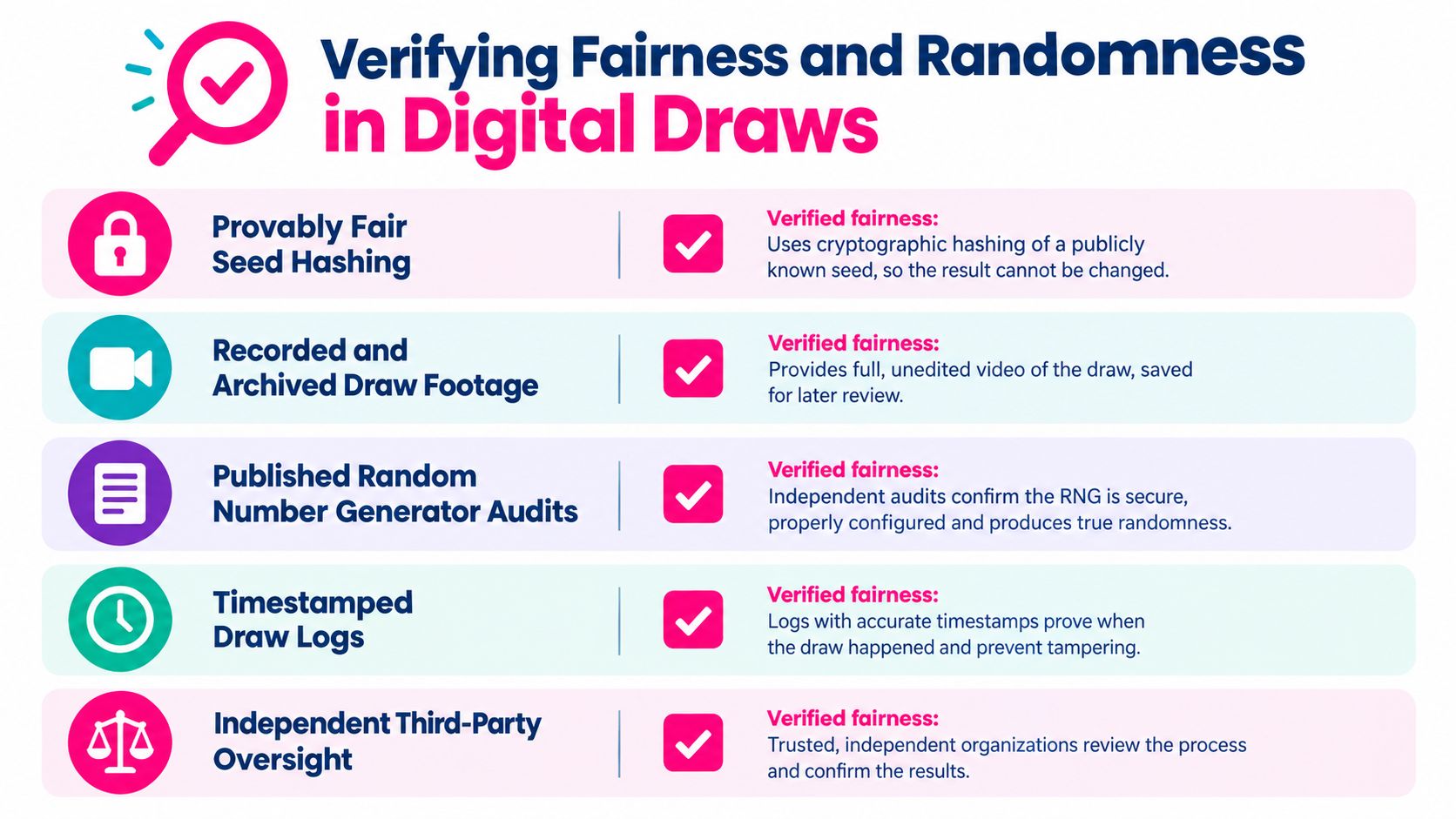
A collector-facing draw proof should connect the published terms to the final outcome in plain language. It does not need to expose private entrant information. It does need to leave enough of an audit trail that participants can understand how the winner was selected and what would have happened if something went wrong.
Useful draw proof usually includes:
- A fixed closing timestamp: the exact point when the eligible pool stops changing.
- A total entry count: the number of valid entries included in the draw.
- An entry-cleaning policy: how duplicates, invalid records, refunds, and incomplete submissions are handled.
- A defined randomisation method: the selection method chosen and documented before the draw takes place.
- A reproducible record: a cryptographic commitment, timestamped log, or similar record showing the result was not altered after closing.
- A redraw policy: what happens if the selected winner cannot be verified, does not respond, or fails an eligibility check.
- Independent oversight: a third-party witness or audit, especially helpful when the prize has significant collector value.
Odds on their own do not answer these questions. They tell you the relationship between the pool and the outcome. They do not show whether the pool was complete, whether the rules were applied consistently, or whether the operator could have adjusted something out of view. A recorded draw has the same limit. It preserves the visible event, not necessarily the hidden preparation.
That gap has attracted regulatory attention. Osborne Clarke's analysis of consumer-law enforcement in prize draws noted concerns about how some operators describe winner selection, and reported that 8% of players believed prizes and conditions were inaccurately described. For a collectibles platform, a clear audit trail is not technical window dressing. It is part of showing the community that the process can be checked.
A good operator can publish a short draw page after each event. It might list the prize description, the eligible entry total, the closing time, the selection method, the winner verification status, and any redraw decision. Private details should stay private. The process should remain visible, especially once the excitement of the announcement has passed and practical questions start.
Historical Roots of Transparent Prize Structures
Long before online dashboards existed, organizers were already learning the same lesson collectors care about now. A draw needs a visible structure, a record of what was offered, and a way for participants to see that the process was administered rather than improvised.
Historical accounts from the Low Countries point to early civic lotteries in Ghent and Utrecht in the mid-1440s. According to records cited by this historical account of lotteries, one dated entry from 9 May 1445 describes 4,304 tickets and 1,737 florins in prize money, with proceeds tied to fortification work. The exact figures should be read as reported by that source, but the broader pattern is clear. Prize structures were being documented because money, public trust, and purpose all depended on clear administration.
England followed with an officially chartered lottery under Queen Elizabeth I in 1566, with the draw taking place in 1569. The same source records 400,000 tickets at 10 shillings each and notes that every ticket holder received a prize, with proceeds supporting public works including harbor repairs. For a modern reader, the important point is less the old accounting than the old discipline. People were expected to understand the terms, the stakes, and the organizer behind the event.
That principle still maps neatly onto collectible promotions. The wrapper has changed. The underlying job has not.
The same principles in a digital hobby
For a collectibles draw, that structure should be concrete and easy to audit:
- Defined entries: State which submissions qualify and how the final pool is counted.
- Specific prize: Identify the card, set, grade, certification, and any relevant condition information.
- Clear timing: Publish when entry opens and closes, using an unambiguous time reference.
- Consistent selection: Explain the randomisation method and how the winner is verified.
- Visible purpose: If the draw supports a community event, explain the relationship without implying that participation creates a benefit it doesn't provide.
Collectors judge fairness the way they judge a slab listing. The headline matters, but the record matters more. Collectors engage more reliably when operators treat draws as administered promotions with records rather than informal promises made in a chat window.
Navigating Post-Win Security and Fulfillment
The winner announcement isn't the finish line. It starts a new security problem, because a high-value slab creates an opportunity for impersonation, payment fraud, privacy exposure, and delivery mistakes. A winner needs to verify the message, protect personal information, and confirm the fulfillment terms before sharing anything sensitive.
A 2025 fraud report placed fake-prize and sweepstakes scams among the three most-reported scam categories, with median losses of $950. It also found that online contact was the initial channel for 48% of complainants. These figures are reported in the 2025 fraud report.
A safer winner protocol
1. Confirm the announcement inside your account.
Do not trust a direct message just because it uses the operator's logo or knows your username. Open the official website yourself, sign in through your normal route, and look for the result in your dashboard. Use the platform's published customer-service channel if the dashboard contains no matching notice.
2. Keep credentials and payment details private.
A legitimate claim process shouldn't require your password, one-time authentication code, or full payment-card credentials. Be especially cautious if someone says you must pay an unexpected “release fee” before the prize can leave a warehouse.
3. Separate disclosed delivery costs from surprise demands.
A genuine shipping charge may be described in the competition terms before entry, including the destination rules that determine whether it applies. An unexpected fee introduced only after you win is a warning sign, particularly if the request arrives through an unverified account or demands an unusual payment method.
4. Ask how your information will be used.
The operator may need a delivery name and address, but a public winner post doesn't need to expose your full address. Ask whether the winner announcement uses an alias, initials, or another limited identifier. High-value collectibles deserve careful handling because the prize can reveal both your interests and your location.
5. Confirm the fulfillment record.
Before accepting the prize, review the destination restrictions, customs or tax responsibilities, insurance terms, tracking method, and signature requirements. The shipment should have a documented handoff and delivery record, not just a promise that it has been sent.
The packaging process also matters once the slab leaves the operator. Collectors can review this guide to packaging Pokémon cards for shipping for practical handling principles, while the draw operator should use protective packaging appropriate to a graded case and provide tracking that doesn't expose unnecessary shipment data publicly.
Security rule: A winner should never have to choose between losing the prize and surrendering a password, card number, or surprise payment.
Building Long-Term Community Engagement
A prize draw works best when it creates a reason to return without making the entire community dependent on winning. The strongest collecting environments give members several ways to participate: watching a live break, bidding in an auction, organizing a collection, selling cards, joining a challenge, or following a scheduled giveaway.
That broader ecosystem changes the emotional role of chance. A collector may enter a draw for a PSA-graded card, but the lasting value can come from learning about condition, seeing how other collectors evaluate a card, or finding a more organized way to manage owned items. A Card Vault, for example, can give members a place to record and showcase their collection instead of treating every interaction as a one-time transaction.
Engagement needs a visible trust layer
Regular events become more credible when the same standards apply each time. Participants should recognize the format of the terms, the location of the winner record, the way eligibility is checked, and the method used to document the result. Consistency makes it easier for new collectors to join without relying on insider knowledge.
Community features can then extend beyond the giveaway itself:
- Live breaks create shared viewing moments around sealed products and individual pulls.
- Auctions let collectors engage through bidding rather than chance.
- Collection tools help members organize authenticated singles, sealed inventory, and graded items.
- Progress-based challenges reward sustained participation with clearly described milestones.
- Email notifications help interested collectors find new drops without requiring constant monitoring.
A competition can also teach better collecting habits. If the prize page identifies the certification, set, card number, and condition, participants learn what information matters when evaluating other listings. If the draw proof records the final pool and selection process, the community gains a standard for assessing future events.
Collectors interested in designing their own recurring activities can explore these community challenge examples. The useful principle is to make progress visible and rewards understandable, while keeping the chance-based event separate from any claim that participation guarantees a result.
Lucardio Collectibles brings authenticated cards, sealed products, PSA-graded items, live breaks, auctions, scheduled prize draws, collection management, and community challenges into one platform. Visit Lucardio Collectibles to review its upcoming collecting experiences and see how transparent draw mechanics, documented fulfillment, and ongoing community participation can work together.