
You open the closet to “finally deal with the cards” and realize it isn't one collection at all. It's a few binders of holos and playable singles, a row of PSA slabs, some sealed boxes you meant to hold longer, and a long tail of commons, reverses, and duplicates that feel too good to dump but too tedious to list one by one.
That's where most sellers get stuck. They search Where can I sell my card collection as if there's one perfect answer, then land on the same platform roundup over and over. In practice, a mixed collection doesn't need one venue. It needs a liquidation plan.
The right question isn't “What's the best place?” It's “Which part of this collection belongs in which channel if I care about net cash, speed, and buyer trust?” Those three things rarely line up in one place. A fast cash offer saves time but usually costs upside. An auction can find strong buyers for the right card, but fees, settlement timing, and unsold risk matter. A marketplace gives you control, but you take on photos, messages, shipping, returns, and fraud friction yourself.
That trade-off matters more in a market this large. The trading cards market was estimated at USD 15.8 billion in 2024 and projected to reach USD 23.5 billion by 2030, implying a 6.5% CAGR according to Strategic Market Research's trading cards market report. Big market size creates options. It also creates uneven liquidity. A clean PSA slab, a raw modern chase card, and a 5,000-count box of bulk don't move the same way.
Table of Contents
- Introduction to Selling Your Card Collection With Confidence
- Preparing and Valuing Your Collection Before You Sell
- Where to Sell Your Cards From Marketplaces to Live Auctions
- Listing Shipping and Fulfillment That Protects Your Payout
- Maximizing Net Proceeds and Avoiding Costly Fees
- Your Next Steps to Sell Smart and Move Your Collection
Introduction to Selling Your Card Collection With Confidence
The sellers who do best usually stop thinking like collectors for a day and start thinking like inventory managers. That doesn't mean treating your collection like junk. It means separating emotion from channel choice.
A graded Charizard with strong eye appeal belongs in a different sales path than a half-complete binder or sealed product with solid demand. If you push everything through one outlet, you usually lose money somewhere. Most often, that loss shows up in hidden labor, weak pricing on the wrong items, or avoidable risk on raw cards.
Start with the real decision
When people ask where they can sell their card collection, they're usually deciding between four priorities:
- Highest possible payout: Better for standout singles, desirable slabs, and scarce items that can attract competitive bidding.
- Fastest cash: Better for whole collections, bulky inventory, and situations where time matters more than squeezing every dollar.
- Least hassle: Better when you don't want to photograph, answer messages, pack dozens of orders, or deal with condition disputes.
- Lowest fraud friction: Better for graded, authenticated, or higher-trust environments where buyers and sellers both want fewer surprises.
Practical rule: Don't choose your venue first. Choose your priority first.
The U.S. trading cards market alone was estimated at USD 10.54 billion in 2025 and projected to reach USD 17.82 billion by 2033, with a 6.9% CAGR from 2026 to 2033, according to Business Research Insights on the trading cards market. For sellers, that means there are enough buyers and channels to be selective. You don't need to force your whole collection into one format just because it's familiar.
Trust affects price more than many sellers expect
Buyer confidence changes what your cards are worth in the market right now. A slab with visible certification, a sealed box in strong shape, or a clearly photographed authentic single is easier to price and easier to move. Raw cards can still sell well, but they invite more questions and more disagreement.
That's why a tiered liquidation system works better than a “best platform” list. Sort by value, speed, and trust requirement, then match each tier to the right selling route. That's how you protect payout without turning a hobby project into a second job.
Preparing and Valuing Your Collection Before You Sell
Before you list anything, pull the collection apart into saleable groups. Most of the money is made or lost. A mixed box sent into a single channel usually underperforms because the best cards don't get enough attention and the weakest cards absorb too much time.
A simple visual checklist helps. Use it while sorting your inventory.
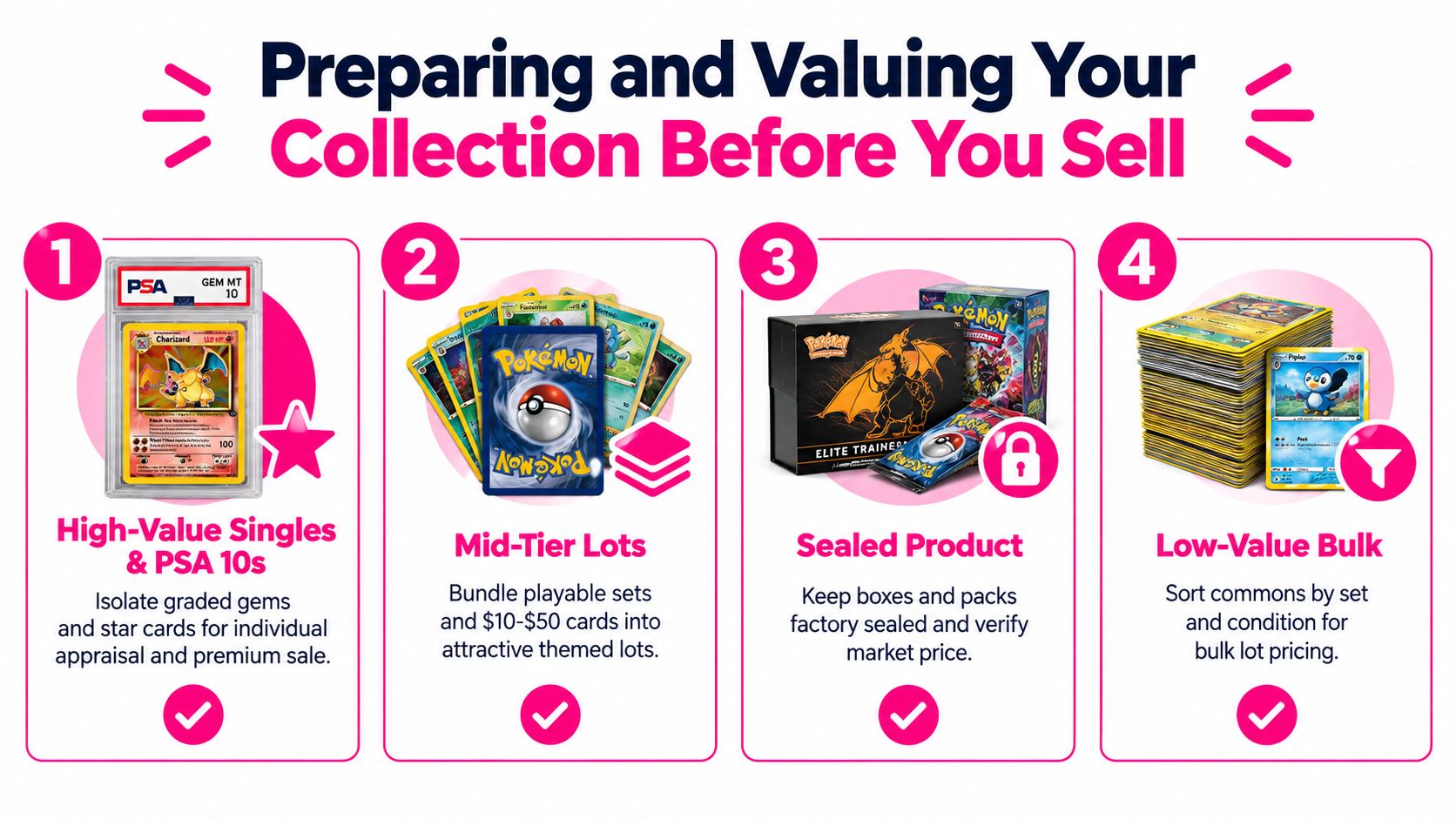
Sort into four working tiers
Use broad buckets first. You can refine later.
High-value singles and premium slabs
Pull out PSA 10s, scarce parallels, cards with obvious demand, and anything you already know buyers search for directly.Mid-tier singles and tight lots
These are cards that still have real resale value but may not justify individual high-touch handling unless demand is strong.Sealed product
Keep boxes, tins, and packs separate. Don't mix them into raw card piles. Sealed inventory attracts a different buyer.Bulk and low-value overflow
Commons, duplicates, damaged cards, and low-demand inserts belong in their own stack. Bulk becomes manageable only when it's clearly defined.
Don't dump a PSA slab, a sealed booster box, and a thousand commons into the same liquidation path. Each one has a different buyer and a different cost structure.
Check condition before you check price
Condition isn't just a detail. It changes which selling route makes sense. For raw cards, review corners, edges, surface, centering, and print defects. For sealed product, note tears, dents, crushed corners, or looseness in shrink wrap. For slabs, verify the certification and inspect the case itself.
If you're handling foil-heavy inventory, surface presentation matters even more because glare, scratching, and curling can create disputes. Practical storage and handling habits make a difference. If you want a quick refresher on how foil cards behave and why presentation matters, this guide on foil trading cards is useful context.
Build a working inventory, not a perfect spreadsheet
You don't need an accountant's workbook. You need a usable list. A note app, spreadsheet, or Card Vault-style tracker is enough if it includes:
- Card name and set
- Condition or grade
- Qty
- Recent sold price range
- Planned selling channel
- Any issue worth disclosing
This is also the right moment to photograph cards in batches. Front, back, close-up of flaws, and certification details for slabs. Strong photos save time twice. First when you list, then again when buyers ask fewer questions.
A short video walkthrough can also sharpen your prep process before you start listing.
Decide what to grade and what to sell raw
Not every nice card should be graded. The cards that justify grading are the ones with clear upside from authentication, condition confirmation, or stronger buyer trust. Premium modern chases, sharp vintage, scarce parallels, and already desirable singles usually deserve the closest look.
Everything else should earn its way into that grading pile. If the likely increase in buyer confidence won't outweigh the delay, cost, and effort, sell it raw with accurate photos and honest condition notes. Sellers often lose margin by over-grading ordinary inventory and under-prepping the cards that benefit from certification.
Where to Sell Your Cards From Marketplaces to Live Auctions
Once the collection is sorted, choosing a venue gets much easier. The answer to where you can sell your card collection depends on what you're selling, how fast you want funds, and how much work you're willing to absorb.
Some channels reward patience and presentation. Others reward clean inventory and realistic expectations.
General marketplaces
Marketplaces work well when you want control. You set the price, write the listing, choose fixed-price or auction, and decide whether to bundle or split.
They fit best for desirable raw singles, mid-tier slabs, and sealed items that already have active buyer demand. The upside is flexibility. The downside is workload. You'll handle messages, offers, payment friction, packing, and possible post-sale disputes yourself.
A huge amount of liquidity sits here, but it isn't evenly distributed. According to Yahoo Sports reporting on eBay's trading card singles activity, trading card singles on eBay alone reached $2.62 billion in 2025. The same report noted that PSA reported intercepting more than $200 million in fraudulent trading cards and tickets in 2025, counterfeit cards were up more than 45% year over year, and fake Pokémon cards were up 125%. That's a good reminder that big audiences help sales, but they also increase the need for clear authentication, careful listing, and channel discipline.
Consignment and auction houses
Consignment makes the most sense for cards that can absorb fees and still leave an attractive payout. Premium slabs, authenticated singles, and cards with bidding appeal belong here far more often than low-end raw inventory.
This route reduces your listing labor, but you give up some control over timing, fees, and sometimes settlement speed. It usually works best when the card is strong enough that exposure and buyer trust outweigh the commission.
Local card shops and in-person deals
Local shops are useful for speed and convenience. If your goal is moving bulk, lower-end collections, or mixed inventory without packaging individual orders, a shop or local buyer can be the cleanest answer.
The trade-off is straightforward. You're selling into a buyer's margin. That's not wrong. It just means you're getting paid for speed and simplicity, not for extracting top retail value from every card.
Live auctions, breaks, and integrated platforms
Live formats suit inventory that benefits from real-time attention. Competitive bidding can work especially well for cards with visual appeal, recognizable grading, or active community interest. Sealed product can also fit if the platform connects selling with live collecting activity.
One option in this category is Lucardio Collectibles, which combines authenticated singles, sealed products, PSA-graded items, live auctions, breaks, a Card Vault, and a collection valuation flow with instant cash-out positioning. For a seller, that matters because it connects discovery, storage, and sale formats in one place rather than splitting them across several tools.
If you want more context on how graded inventory is presented and marketed, this overview of PSA graded cards for sale shows the kind of certification visibility buyers expect.
Choosing by tier instead of by hype
Here's the practical way to decide.
| Collection Tier | Best Fit Venue | Speed to Cash | Key Trade Off |
|---|---|---|---|
| High-value slabs and authenticated singles | Consignment or auction house | Slower | Better buyer trust, but fees and settlement matter |
| Strong raw singles and mid-tier graded cards | General marketplace | Medium | More control, more labor, more message volume |
| Sealed product | Marketplace or live auction format | Medium | Good visibility, but packaging and condition details matter |
| Low-value bulk and mixed commons | Local shop, local buyer, or bulk deal | Fast | Lower payout, far less work |
| Whole collection with mixed quality | Valuation or direct buyout route | Fastest | Convenience usually costs some upside |
If a card needs explanation to justify its price, don't put it in a low-trust, low-touch channel.
Listing Shipping and Fulfillment That Protects Your Payout
A card isn't sold when the payment comes in. It's sold when the buyer receives exactly what you described and has no reason to open a dispute.
That sounds obvious, but payout protection usually fails in the basics. Vague condition notes, cropped photos, weak packaging, or sloppy title writing can erase the gain from choosing the right venue.
Build listings that answer the buyer's doubts first
Write titles buyers search for. Include the player or Pokémon, set, card number, grade if applicable, and any relevant variation. For slabs, show the certification clearly in photos. For sealed product, make the seal condition visible from more than one angle.
Then describe the item like a careful seller, not an optimistic one.
- Condition disclosure: Mention whitening, scratches, print lines, dents, and any case wear on slabs.
- Authentication visibility: If the item is graded or otherwise authenticated, make that visible early in the listing.
- Packaging detail: Tell buyers how the card or sealed item will ship.
- No surprise language: Avoid broad condition claims that your photos can't support.
A buyer will forgive a flaw you disclosed. They usually won't forgive one they discover themselves.
Protect the card before you protect the package
Use the right holder for the item type. Raw cards need penny sleeves and rigid support. Slabs need a snug wrap that prevents case scratching and movement in transit. Sealed boxes need edge protection and a carton that doesn't collapse under pressure.
If you're selling raw singles regularly, this guide to the rigid card holder covers the basic protection standard most buyers expect.
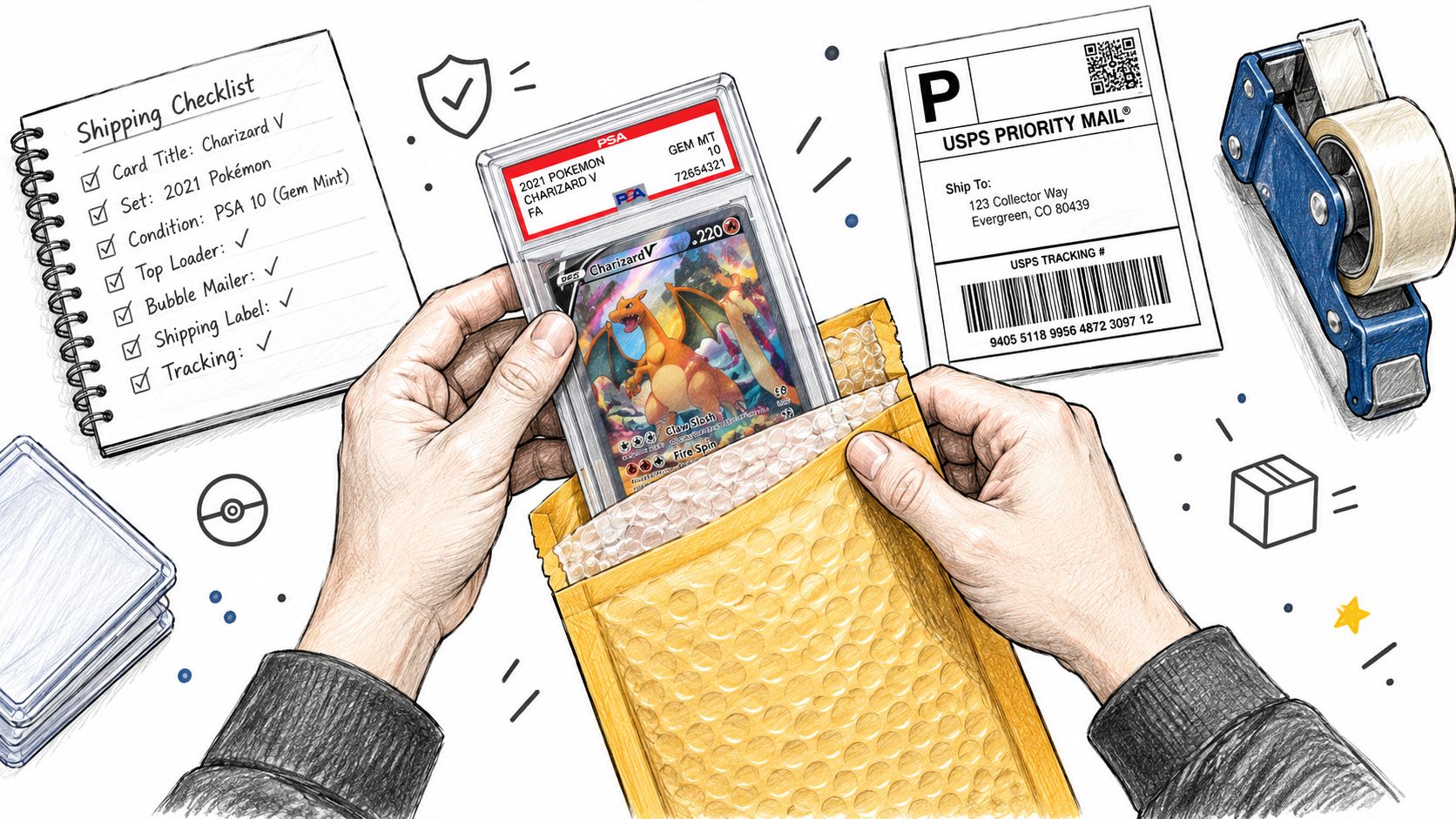
Use fulfillment habits that reduce disputes
A repeatable shipping routine matters more than fancy materials. Keep it simple and consistent.
- Photograph before sealing: Take final item and packing photos before the mailer closes.
- Track every shipment: Use trackable shipping so delivery questions don't turn into avoidable claims.
- Separate expensive items: Don't combine premium cards with low-end filler if damage to one item could threaten the whole order.
- Match packing to weight: A slab in a thin mailer and a sealed box in an oversized loose carton both create preventable problems.
If you use live auctions or break-style formats, fulfillment speed and order accuracy matter even more. Buyers in those channels are often purchasing on momentum. If you follow up with slow handling or weak packaging, you burn trust fast.
Maximizing Net Proceeds and Avoiding Costly Fees
Headline sale price is only half the story. The number that matters is what lands in your account after fees, shipping, insurance, and any costs tied to listing or unsold inventory.
Many sellers choose the wrong channel. They see a stronger gross number in one venue, then keep less money after everything comes out.
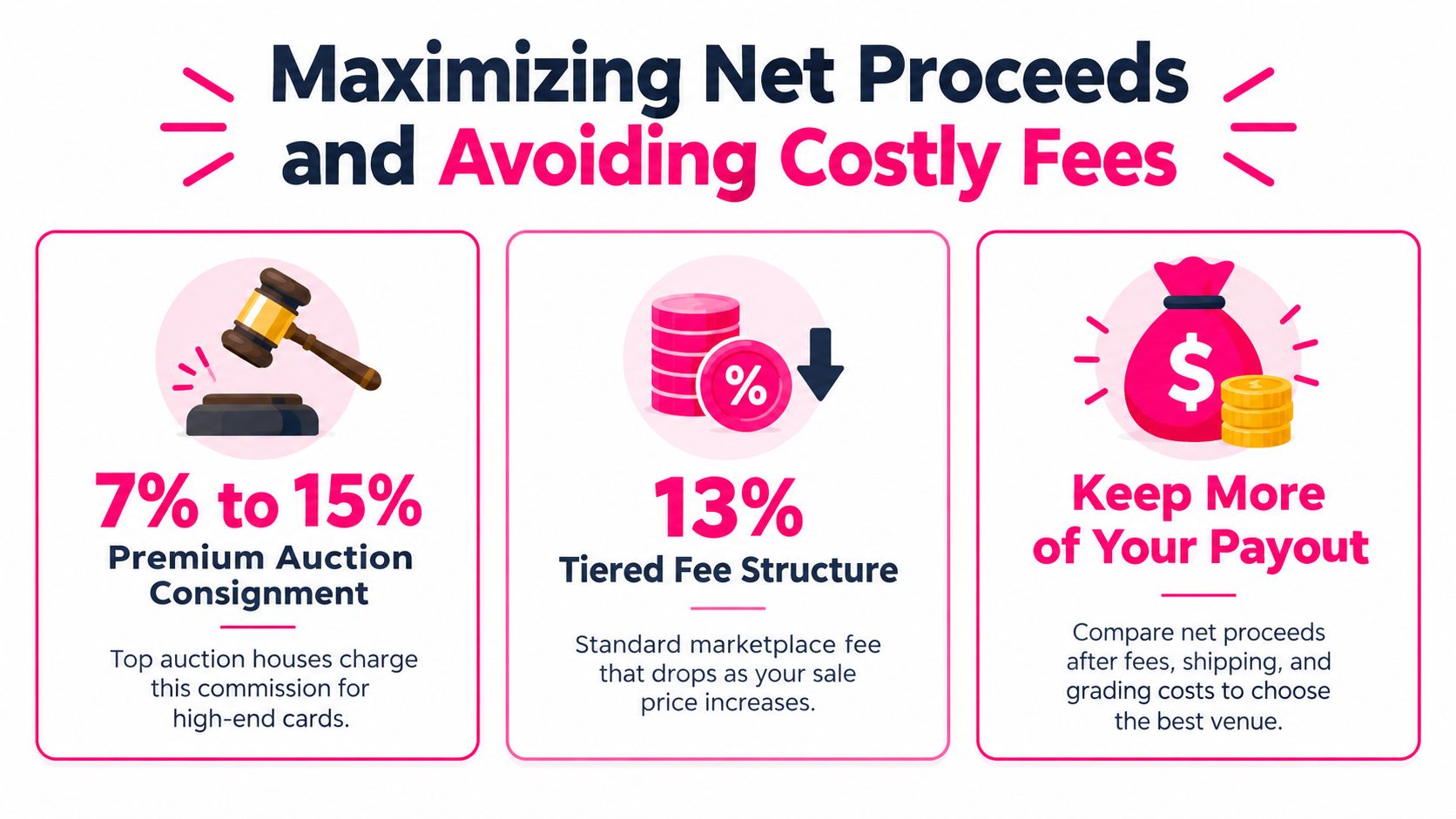
Know the published fee ranges before you consign
For high-value liquidation, published consignment models typically net the seller about 80% to 97% of the final sale price, and lower-value lots may face a $0.99 listing fee, a $5 lot fee, plus an extra $2 fee for each card that doesn't sell, according to All Mint Trading's consignment sports cards breakdown. That one detail changes how you should treat low-end inventory.
A premium card can absorb layered costs. A cheap card often can't. Once flat charges and relisting friction enter the picture, the wrong venue can drain most of the margin from lower-value items.
Premium cards justify premium channels only when the math works
For graded and authenticated cards, seller-side commissions on major auction and consignment channels commonly fall in the 7% to 15% range for premium pieces. PSA's published schedule drops from 13% plus a flat fee under $100 to 7% at $5,000+, according to PSA's consignment rates. That tiering is exactly why strong slabs and scarce authenticated singles deserve their own decision process.
Use a simple net-proceeds check before you list:
- Expected sale price
- Minus seller commission
- Minus listing or lot fees
- Minus shipping and insurance
- Minus any grading, cataloguing, or handling cost you took on
- Equals net cash
Net-proceeds test: If a premium venue raises gross price but lowers actual payout after fees, it wasn't the right venue for that card.
What works and what usually doesn't
The best-performing approach is usually tiered.
- Use fee-heavy channels for cards with grading leverage: PSA 10s, scarce parallels, and authenticated singles can justify commissions because trust helps them clear at stronger prices.
- Bundle mid-range inventory intelligently: Small themed lots often outperform random mixed piles because buyers understand what they're getting.
- Move bulk in bulk: Low-end cards usually need speed and low handling cost more than they need broad exposure.
- Avoid mixed-quality consignments: Sending your best slabs and weakest filler into the same format often drags down the total result.
What usually doesn't work is chasing the highest visible comp without backing into the net. Sellers do this all the time with cards that look valuable in screenshots but become mediocre deals after commissions, flat fees, and shipping are accounted for.
The right sale isn't the highest hammer. It's the highest payout you can keep.
Your Next Steps to Sell Smart and Move Your Collection
If you've been stalled because the collection feels too mixed, that's normal. Most collections worth selling aren't neat. They're layered. That's why the best answer to where you can sell your card collection isn't one destination. It's a system.
Use this week's decision checklist
Start with a single pass through the collection and make four piles: premium singles or slabs, mid-tier cards, sealed product, and bulk. Then assign each pile a goal. Some inventory should chase stronger pricing. Some should be converted into cash fast. Some should leave your house in one transaction because your time matters too.
Then pressure-test each route with one question: What will I keep after the sale is finished? If the card needs trust, choose a high-trust channel. If the item needs speed, choose a direct route. If the inventory is low-end, don't force it into a high-friction format that eats margin.
The cleanest selling plan is usually mixed
A smart liquidation often looks like this:
- Top cards go to auction or consignment where buyer confidence is strongest.
- Solid singles go to a marketplace where you control price and presentation.
- Sealed items get their own listings with careful packaging and condition detail.
- Bulk moves locally or through a direct collection offer.
- Whole-collection urgency points toward valuation and cash-out options.
That's the part most “best place to sell cards” articles miss. You don't need one perfect outlet. You need the discipline to stop treating very different inventory as if it belongs in the same lane.
If you do that, you'll make better decisions faster. You'll spend less time relisting weak items, less time arguing over condition, and less time wondering why a strong gross number turned into a mediocre payout.
The project gets easier once the collection stops being sentimental clutter and starts being sorted inventory with a plan.
If you want one place to explore that approach, Lucardio Collectibles brings together authenticated singles, sealed products, PSA-graded items, live auctions, breaks, Card Vault collection tools, and a sell-your-collection valuation flow. If your goal is to move a mixed collection without juggling multiple disconnected platforms, it's a practical option to review before you start listing card by card.